
Human growth hormone (HGH) and testosterone are two hormones that play important roles in human health. Both influence physical development and aspects of metabolism, but they are not interchangeable.
HGH is primarily associated with growth, tissue development, and metabolic regulation. Testosterone is an androgen hormone involved in male sexual development, reproductive function, bone health, and other physiological processes.
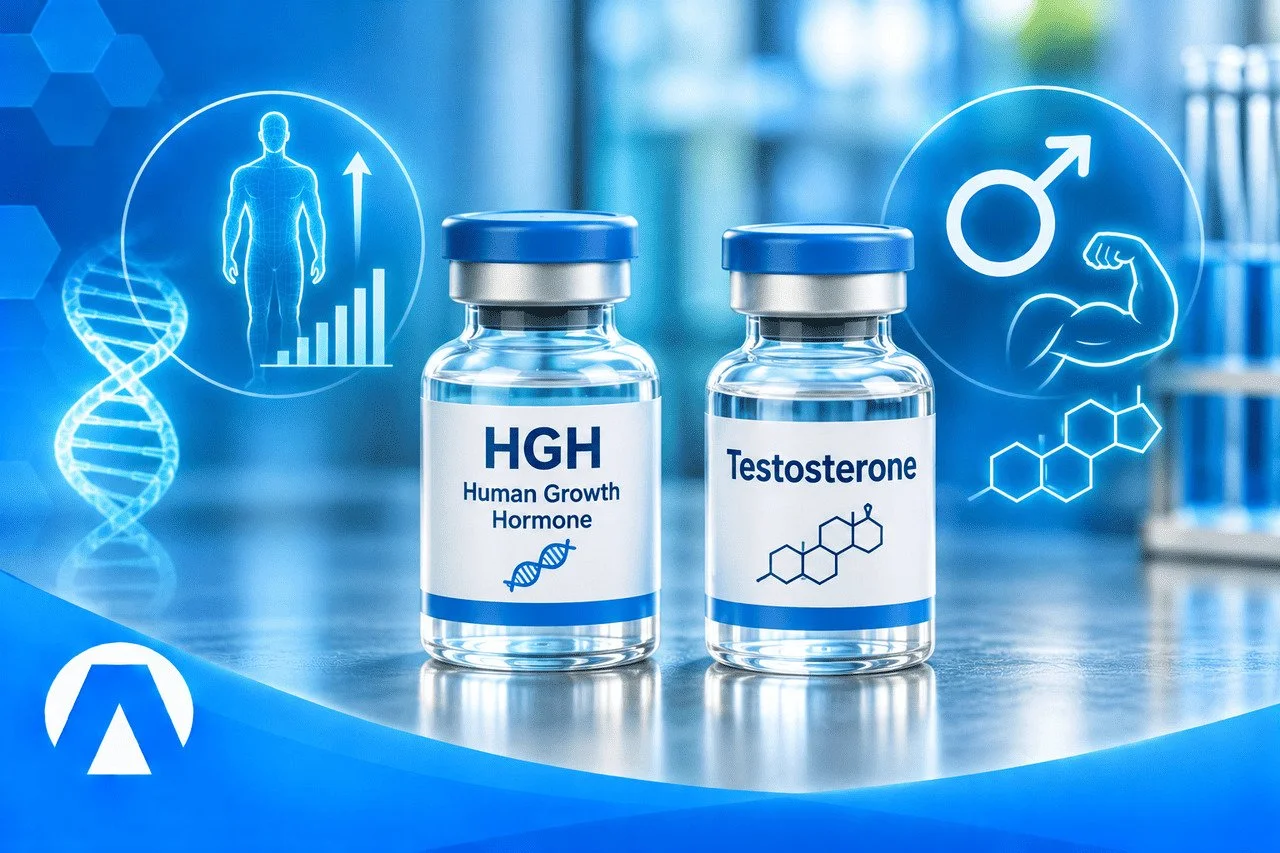
Because both hormones are discussed in relation to muscle tissue, aging, and hormone replacement, people sometimes assume that they perform similar functions.
However, HGH and testosterone are different hormones with different production pathways, diagnostic tests, approved medical uses, and safety considerations.
The distinction becomes particularly important when someone experiences symptoms such as fatigue, changes in body composition, or reduced physical function.
These symptoms do not automatically indicate a deficiency in either hormone.
Diagnosing a hormone deficiency requires a medical evaluation that considers symptoms, medical history, laboratory findings, and possible underlying conditions.
This article explains HGH vs. testosterone, including how each hormone works, what happens when levels are deficient, how clinicians evaluate hormonal disorders, and when prescription treatment may be medically appropriate.
HGH vs. Testosterone: Quick Answer
The main difference between HGH and testosterone is their biological function.
Human growth hormone is a protein hormone produced by the pituitary gland. It helps regulate growth and metabolism, partly through a hormone called insulin-like growth factor 1 (IGF-1).
Testosterone is a steroid hormone produced primarily by the testes in men. It plays a central role in male reproductive development, sexual function, and the maintenance of several tissues.
Although both hormones influence aspects of muscle and bone physiology, they act through different mechanisms.
Prescription growth hormone may be used for certain medically established conditions, including confirmed growth hormone deficiency.
Prescription testosterone may be used for appropriately diagnosed testosterone deficiency associated with a recognized medical condition.
Neither should be used as a general anti-aging treatment, bodybuilding aid, or substitute for evaluation of unexplained symptoms.
HGH vs. Testosterone Comparison Chart
Although human growth hormone (HGH) and testosterone are both important hormones, they differ in their biological functions, production, regulation, and medical applications.
Here are the key differences between HGH and testosterone:
Hormone type: HGH is a protein or peptide hormone, while testosterone is a steroid hormone.
Main production site: HGH is produced by the anterior pituitary gland. Testosterone is produced primarily by the testes in men.
Hormonal regulation: HGH is regulated by the hypothalamic-pituitary growth hormone axis, while testosterone is regulated by the hypothalamic-pituitary-gonadal axis.
Important related hormones: HGH is closely associated with insulin-like growth factor 1 (IGF-1). Testosterone is associated with dihydrotestosterone (DHT) and estradiol.
Primary functions: HGH supports growth and metabolic regulation. Testosterone contributes to reproductive development, sexual function, and tissue maintenance.
Role during childhood and adolescence: HGH is essential for normal growth during childhood. Testosterone becomes particularly important during puberty.
Role in adulthood: HGH continues to support metabolic and tissue-related functions. Testosterone contributes to sexual, reproductive, bone, and other physiological functions.
Laboratory testing: HGH-related disorders are commonly evaluated using IGF-1 measurements and, when indicated, growth hormone stimulation testing. Testosterone evaluation generally includes total testosterone, with free testosterone and sex hormone-binding globulin (SHBG) considered when appropriate.
Deficiency diagnosis: Growth hormone deficiency usually requires specialized endocrine testing. Testosterone deficiency requires compatible clinical findings and supporting testosterone measurements.
Prescription replacement therapy: Both HGH and testosterone have specific approved medical indications. Treatment depends on an appropriate diagnosis and individualized medical evaluation.
Interchangeability: HGH and testosterone are not interchangeable because they act through different biological pathways and serve different physiological functions.
These differences demonstrate why comparing HGH and testosterone solely on the basis of muscle-related effects can be misleading.
Their biological roles and medical applications are substantially different.
What Is Human Growth Hormone (HGH)?
Human growth hormone, also called somatotropin or GH, is a protein hormone produced by the anterior pituitary gland.
The pituitary gland is a small endocrine organ located near the base of the brain.
Growth hormone secretion is regulated by signals from the hypothalamus.
These include growth hormone-releasing hormone and somatostatin, which help regulate the release of GH.
Growth hormone secretion occurs in pulses rather than at a constant rate.
Levels fluctuate throughout the day and night, with important relationships to sleep, age, nutritional status, and other physiological factors.
What Does HGH Do?
Growth hormone has several functions.
During childhood and adolescence, it contributes to normal linear growth.
In adults, it participates in metabolic regulation and influences the maintenance of various tissues.
Some of its effects occur directly, while others are mediated through IGF-1.
HGH and IGF-1
IGF-1 stands for insulin-like growth factor 1.
Growth hormone stimulates IGF-1 production, particularly in the liver, although other tissues also produce IGF-1.
IGF-1 contributes to growth-related signaling and other physiological processes.
Clinicians may measure IGF-1 when evaluating suspected growth hormone disorders.
However, IGF-1 is not identical to growth hormone, and its concentration can be affected by factors such as age, nutritional status, liver disease, and other medical conditions.
A single IGF-1 result does not always establish whether growth hormone production is adequate.
What Is Testosterone?
Testosterone is an androgen hormone produced primarily by Leydig cells in the testes in men.
Smaller amounts of testosterone and related androgens are produced through other pathways.
Testosterone production is regulated by the hypothalamic-pituitary-gonadal axis.
The hypothalamus releases gonadotropin-releasing hormone, which signals the pituitary gland to produce luteinizing hormone and follicle-stimulating hormone.
Luteinizing hormone stimulates testosterone production in the testes.
Testosterone then participates in feedback regulation of this hormonal system.
What Does Testosterone Do?
Testosterone contributes to several physiological functions.
These include:
Male sexual development during puberty
Sexual desire
Normal reproductive physiology
Maintenance of bone density
Red blood cell production
Maintenance of muscle tissue
Other androgen-dependent processes
Testosterone also acts as a precursor to other hormones.
It can be converted to dihydrotestosterone, or DHT, through the enzyme 5-alpha reductase.
It can also be converted to estradiol through aromatase.
These pathways are important because testosterone's physiological effects are not limited to testosterone itself.
Total Testosterone vs. Free Testosterone
Most testosterone in circulation is bound to proteins.
Two important binding proteins are sex hormone-binding globulin, or SHBG, and albumin.
Free testosterone is the fraction that is not protein-bound.
In selected clinical situations, free testosterone and SHBG can provide additional information beyond total testosterone alone.
However, these measurements must be interpreted using appropriate methods and laboratory reference intervals.
For more information, read Free Testosterone: Why Measuring the Active Hormone Matters More Than Total Testosterone.
Where Are HGH and Testosterone Produced?
One of the clearest differences between HGH and testosterone is where they originate.
HGH Production
HGH is produced in the anterior pituitary gland.
The hypothalamus helps regulate its secretion through stimulatory and inhibitory signals.
GH secretion is pulsatile, which makes random blood measurements difficult to interpret.
Testosterone Production
Testosterone is produced primarily in the testes.
The hypothalamus and pituitary regulate production through gonadotropin signaling.
Disorders affecting either the testes or the brain structures controlling them can contribute to testosterone deficiency.
Can the Pituitary Gland Affect Both Hormones?
Yes.
The pituitary gland is involved in regulating both hormonal systems.
A pituitary disorder can potentially affect growth hormone secretion and the signals controlling testosterone production.
For example, certain pituitary tumors, surgical procedures, radiation exposure, or other structural conditions may cause deficiencies involving multiple hormones.
This is one reason clinicians consider the broader endocrine system when evaluating suspected pituitary disease.
However, having low testosterone does not automatically mean a person has growth hormone deficiency.
HGH vs. Testosterone: How They Affect the Body
Both hormones influence human physiology, but their effects are not identical.
Growth and Development
Growth hormone plays a major role in normal childhood growth.
Testosterone becomes particularly important during male puberty, contributing to sexual maturation and the adolescent growth spurt.
Both hormones participate in development, but through different pathways.
Bone Health
Growth hormone and IGF-1 contribute to skeletal development and bone metabolism.
Testosterone also supports bone health, partly through conversion to estradiol.
Deficiencies in either system may be associated with changes in bone health in certain clinical circumstances.
However, bone density is affected by many factors, including age, nutrition, physical activity, medications, and other hormones.
Muscle Physiology
Growth hormone influences protein metabolism and tissue physiology.
Testosterone contributes to the maintenance of muscle tissue and other androgen-dependent processes.
These roles sometimes lead to confusion about whether the hormones are interchangeable.
They are not.
Differences in hormone function do not establish that administering either hormone to someone without a diagnosed deficiency is medically appropriate.
Metabolism
Growth hormone influences lipid and carbohydrate metabolism.
Testosterone also has relationships with metabolic physiology.
However, neither hormone should be described as a general treatment for obesity or weight loss.
Changes in weight or body composition require evaluation in the context of overall health.
Reproductive Function
Testosterone plays a direct role in male reproductive physiology.
Growth hormone has biological interactions with reproductive systems, but it is not a substitute for testosterone.
Prescription testosterone can suppress the body's gonadotropin signaling and sperm production.
Men who are considering testosterone treatment and wish to preserve fertility should discuss this risk with their medical provider.
What Happens When HGH Is Low?
Growth hormone deficiency occurs when the body does not produce enough growth hormone for its physiological needs.
The condition can occur in childhood or adulthood.
Adult growth hormone deficiency is a specific endocrine disorder, not simply the expected decline in growth hormone secretion that accompanies aging.
Causes of Adult Growth Hormone Deficiency
Possible causes include:
Pituitary tumors or other structural abnormalities
Surgery involving the pituitary or hypothalamic region
Radiation affecting these structures
Certain genetic or congenital conditions
Other recognized pituitary disorders
Selected cases associated with significant brain injury
Some people diagnosed with growth hormone deficiency during childhood require reassessment when transitioning to adulthood.
The Endocrine Society recommends evaluating adult growth hormone deficiency primarily in people with a relevant clinical history or other evidence suggesting pituitary or hypothalamic disease.
Symptoms of Adult Growth Hormone Deficiency
Possible findings may include changes in body composition, reduced exercise capacity, reduced bone density, and changes in quality-of-life measures.
However, these findings are nonspecific.
They may also occur with other medical conditions.
Fatigue or increased body fat alone does not establish growth hormone deficiency.
Does Low HGH Mean You Need HGH Treatment?
No.
A low random growth hormone measurement does not establish adult growth hormone deficiency.
Because growth hormone secretion occurs in pulses, random measurements are generally not useful for diagnosing the condition.
In most cases, diagnosis requires specialized stimulation testing and appropriate clinical context.
Treatment decisions should be made by clinicians experienced in evaluating endocrine disorders.
What Happens When Testosterone Is Low?
Testosterone deficiency, also called male hypogonadism in appropriate clinical circumstances, occurs when testosterone production or regulation is impaired.
Possible causes can involve the testes, pituitary gland, hypothalamus, medications, or other medical conditions.
Primary Hypogonadism
Primary hypogonadism involves dysfunction at the level of the testes.
The pituitary gland may produce elevated luteinizing hormone and follicle-stimulating hormone levels in response to inadequate testicular hormone production.
Secondary Hypogonadism
Secondary hypogonadism involves impaired stimulation of the testes by the hypothalamus or pituitary gland.
Testosterone may be low while gonadotropin levels are low or inappropriately normal.
Some causes may be reversible or require specific medical treatment.
Symptoms of Testosterone Deficiency
Possible symptoms and signs include:
Reduced sexual desire
Certain sexual-function changes
Reduced spontaneous erections
Fertility concerns
Reduced bone density
Other findings associated with androgen deficiency
Fatigue and reduced energy may also occur, but these symptoms are nonspecific.
A diagnosis should not be based solely on tiredness, age, or a single laboratory value.
HGH Deficiency vs. Testosterone Deficiency: Symptom Comparison
Growth hormone deficiency and testosterone deficiency can share certain symptoms, but they are distinct medical conditions.
Understanding their similarities and differences can help explain why proper hormonal evaluation is important.
Fatigue: Fatigue may occur in individuals with either growth hormone deficiency or testosterone deficiency.
Reduced exercise capacity: Both conditions may be associated with reduced exercise capacity.
Changes in body composition: Changes in body composition can occur with either hormone deficiency.
Reduced bone density: Both growth hormone deficiency and testosterone deficiency may be associated with reduced bone density.
Reduced sexual desire: Reduced libido may be a prominent symptom of testosterone deficiency. It is not a defining feature of growth hormone deficiency.
Fertility concerns: Fertility problems may occur with testosterone deficiency. They are not a typical primary presentation of growth hormone deficiency.
History of pituitary disease: Pituitary disease is an important risk factor when evaluating possible growth hormone deficiency. It may also indicate secondary hypogonadism in men with testosterone deficiency.
Abnormal growth hormone stimulation testing: An abnormal GH stimulation test may support a diagnosis of growth hormone deficiency. This test is not used to diagnose testosterone deficiency.
Low testosterone with compatible symptoms: Low testosterone accompanied by appropriate clinical findings may support a diagnosis of testosterone deficiency. These findings do not establish growth hormone deficiency.
Because several symptoms overlap, self-diagnosis is unreliable.
A medical provider may need to investigate other possible explanations, including sleep disorders, thyroid disease, anemia, medication effects, or chronic illness.
How Is HGH Deficiency Diagnosed?
Adult growth hormone deficiency requires specialized assessment.
The diagnostic process usually begins with medical history and examination.
Clinicians may consider whether the patient has a known pituitary disorder, previous pituitary surgery, cranial radiation, childhood-onset growth hormone deficiency, or other relevant risk factors.
IGF-1 Blood Testing
IGF-1 is commonly measured during evaluation.
A low IGF-1 concentration may increase suspicion for growth hormone deficiency in the appropriate clinical context.
However, IGF-1 can be affected by other conditions.
A normal IGF-1 result also does not necessarily exclude growth hormone deficiency.
Growth Hormone Stimulation Testing
Because growth hormone secretion is pulsatile, specialized stimulation testing is usually required.
Depending on the patient's medical history and available testing methods, an endocrinologist may use an accepted stimulation test.
Different tests have different contraindications, limitations, and interpretation thresholds.
The Endocrine Society recommends growth hormone stimulation testing for suspected deficiency in most cases, with exceptions for selected patients with established structural or genetic disorders and multiple pituitary hormone deficiencies.
Why Random HGH Testing Can Be Misleading
Growth hormone concentrations can be very low between secretion pulses even in healthy individuals.
Therefore, a random GH measurement may not accurately reflect overall hormone production.
This is one of the major differences between HGH and testosterone evaluation.
How Is Testosterone Deficiency Diagnosed?
Testosterone evaluation follows a different process.
A clinician considers symptoms, signs, medical history, and laboratory findings.
Total Testosterone Testing
Total testosterone is commonly used as an initial laboratory measurement.
The American Urological Association recommends a total testosterone concentration below 300 ng/dL as a reasonable cutoff supporting diagnosis, together with appropriate symptoms or signs.
The AUA recommends two separate early-morning total testosterone measurements.
The Endocrine Society also recommends confirming consistently low testosterone concentrations.
These are published guideline recommendations and should not be interpreted as a description of the specific testing protocol followed by every medical practice.
Free Testosterone and SHBG
Free testosterone and SHBG may provide additional information in selected situations.
For example, changes in SHBG can influence the relationship between total and free testosterone.
However, a single free testosterone measurement does not automatically establish a diagnosis or justify treatment.
Additional Hormone Testing
Depending on clinical findings, a provider may consider:
Luteinizing hormone
Follicle-stimulating hormone
Prolactin
Other pituitary or endocrine measurements
These tests may help identify the cause of an abnormal testosterone result.
For more information, read Essential Labs for Testosterone Therapy.
Does HGH Increase Testosterone?
HGH is not an established treatment for testosterone deficiency and should not be used to increase testosterone levels.
Growth hormone and testosterone are regulated by different endocrine pathways.
Although hormonal systems interact, administering growth hormone does not reliably correct impaired testosterone production.
If a person has a pituitary disorder affecting both hormone systems, each deficiency may require its own diagnostic evaluation.
Treating one deficiency does not automatically resolve the other.
Can HGH Replace Testosterone?
No.
Growth hormone does not replace testosterone's role in male reproductive physiology.
A man with medically diagnosed hypogonadism should not assume growth hormone treatment is an alternative to appropriate testosterone-deficiency management.
Does Testosterone Increase HGH?
Testosterone can interact with growth hormone and IGF-1 physiology, particularly during puberty.
However, these biological relationships do not establish testosterone therapy as a treatment for adult growth hormone deficiency.
Prescription testosterone should not be used to stimulate growth hormone for nonmedical purposes.
Can HGH and Testosterone Both Be Low?
Yes.
Certain pituitary or hypothalamic disorders can affect multiple hormone pathways.
A patient with known pituitary disease may require assessment of several endocrine systems.
This is different from assuming that age-related changes or nonspecific symptoms indicate multiple hormone deficiencies.
HGH vs. Testosterone for Aging
Both growth hormone and testosterone physiology change across the lifespan.
However, normal age-related changes are not equivalent to medically diagnosed hormone deficiencies.
Does HGH Decline With Age?
Growth hormone secretion generally decreases with age.
This physiological pattern is sometimes described as somatopause.
However, the term does not establish a medical disorder requiring treatment.
The Endocrine Society's adult growth hormone deficiency guideline explicitly distinguishes treatment of confirmed deficiency from unapproved anti-aging uses.
Does Testosterone Decline With Age?
Testosterone concentrations may also change during adulthood.
However, individual patterns vary.
Health status, medications, body composition, SHBG, and other factors can influence measurements.
An older age or a lower testosterone result does not automatically establish a condition requiring treatment.
Learn more in Testosterone Levels by Age: Normal Ranges, Average Levels, and What They Mean.
Are HGH or Testosterone Anti-Aging Treatments?
Neither hormone should be promoted as a general anti-aging treatment.
Prescription growth hormone is not FDA-approved for reversing normal aging.
FDA-approved testosterone products are indicated for men with low testosterone associated with recognized medical conditions, not simply age-related decline without an associated medical condition.
Neither hormone has been established as a safe or appropriate way to reverse normal aging.
HGH vs. Testosterone for Muscle Growth
HGH and testosterone are frequently compared in bodybuilding discussions.
However, their legitimate medical uses should not be confused with nonmedical hormone enhancement.
Both hormones affect aspects of tissue physiology, but that does not mean either should be administered to healthy individuals for muscle growth.
Prescription growth hormone is not an approved bodybuilding treatment.
Prescription testosterone is not approved simply to increase muscle mass or athletic performance in people without an appropriate medical diagnosis.
Nonmedical use can expose individuals to significant health risks.
Is HGH an Anabolic Steroid?
No.
HGH is a protein hormone.
Testosterone is a steroid hormone.
Although both influence biological processes related to tissue growth and maintenance, they belong to different hormone classes.
Is Testosterone Stronger Than HGH?
There is no scientifically meaningful general answer.
The hormones have different receptors, functions, and medical indications.
Comparing them as if they were interchangeable products is misleading.
The relevant medical question is whether a specific hormonal disorder has been diagnosed and whether a particular treatment is indicated.
HGH vs. Testosterone for Weight Loss
Neither prescription HGH nor testosterone should be presented as a general weight-loss treatment.
Although growth hormone and testosterone are involved in metabolic physiology, this does not establish that hormone replacement is appropriate for obesity without a relevant endocrine diagnosis.
Weight changes can result from numerous factors, including nutrition, physical activity, medications, sleep, metabolic conditions, and other medical issues.
Patients concerned about weight should receive an appropriate assessment rather than assuming that hormone therapy is necessary.
Does HGH Burn Fat?
Growth hormone influences lipid metabolism.
However, this physiological role does not justify using prescription growth hormone for cosmetic fat reduction or general weight loss.
Nonmedical growth hormone use can cause adverse effects, including fluid retention and problems with glucose regulation.
Does Testosterone Cause Weight Loss?
Testosterone deficiency and metabolic health can be related in some men.
However, testosterone therapy is not an approved general weight-loss treatment.
Any treatment decision should be based on a medically appropriate indication rather than expected changes in body composition.
Medical Uses of HGH Therapy
Prescription recombinant human growth hormone, commonly called somatropin, has FDA-approved uses for specific medical conditions.
These include certain forms of growth hormone deficiency and other defined indications, depending on the product.
In adults, one important indication is confirmed growth hormone deficiency.
Treatment of Adult Growth Hormone Deficiency
For appropriately diagnosed patients, an endocrinologist may consider growth hormone replacement after evaluating potential benefits and risks.
The Endocrine Society reports that treatment can benefit selected adults with confirmed growth hormone deficiency.
However, treatment is not appropriate for everyone.
Monitoring During Growth Hormone Therapy
Clinical monitoring may include:
IGF-1 measurements
Assessment of adverse effects
Glucose-related measurements when appropriate
Evaluation of other pituitary hormone deficiencies
Review of relevant medical conditions
Treatment decisions and dosing are individualized.
Growth hormone replacement should not be started based solely on fatigue, age, or a desire for physical enhancement.
Medical Uses of Testosterone Replacement Therapy
Prescription testosterone is used for certain forms of male hypogonadism associated with recognized medical conditions.
Treatment requires appropriate clinical evaluation.
A provider may consider symptoms, testosterone measurements, potential causes, contraindications, and fertility plans.
What Is TRT?
Testosterone replacement therapy, or TRT, involves administering prescription testosterone to appropriately selected patients.
Different formulations have different administration methods, pharmacological properties, and monitoring considerations.
TRT is not appropriate for every man with fatigue, reduced motivation, or an age-related change in testosterone.
What Does TRT Monitoring Involve?
Monitoring depends on the treatment and patient.
It may include:
Testosterone measurements
Hematocrit
Assessment of treatment-related adverse effects
Prostate-related evaluation when appropriate
Review of cardiovascular and other medical risks
Ongoing assessment of the treatment indication
TRT can suppress sperm production, making fertility counseling important.
For more information about medically supervised evaluation, visit Testosterone Replacement Therapy (TRT) for Men.
HGH Side Effects and Risks
Prescription growth hormone can cause adverse effects.
Potential risks and considerations include fluid retention, swelling, joint discomfort, muscle discomfort, carpal tunnel symptoms, and changes in glucose regulation.
Some individuals may develop insulin resistance or worsening glucose control.
Patients with certain medical conditions require additional caution.
Growth hormone treatment is contraindicated in some circumstances, including active malignancy.
Product-specific contraindications and warnings must also be considered.
Does HGH Increase Cancer Risk?
Growth hormone and IGF-1 participate in growth-related signaling.
This has led to important research questions about cancer risk and long-term treatment safety.
However, the relationship is complex.
It would be inaccurate to claim that medically prescribed growth hormone inevitably causes cancer.
It would also be inappropriate to claim that long-term risks have been completely resolved.
Patients with a history of cancer or other significant conditions require individualized specialist evaluation.
Does HGH Affect Blood Sugar?
Yes.
Growth hormone influences glucose metabolism.
Prescription growth hormone can reduce insulin sensitivity in some patients.
This is particularly relevant for people with diabetes or risk factors for impaired glucose regulation.
Clinical monitoring may be necessary.
Testosterone Therapy Side Effects and Risks
Prescription testosterone also has potential adverse effects.
These may include increased hematocrit, acne, changes in skin oil production, fertility suppression, and other formulation-specific effects.
Some patients may experience fluid retention or other treatment-related changes.
Testosterone and Fertility
External testosterone can suppress luteinizing hormone and follicle-stimulating hormone signaling.
This can reduce sperm production.
Men who want to preserve fertility should discuss their plans before starting treatment.
Testosterone and Cardiovascular Health
Cardiovascular safety requires individualized consideration.
The TRAVERSE trial evaluated testosterone therapy in a defined population of men with hypogonadism and cardiovascular disease or elevated cardiovascular risk.
The trial found noninferiority for its primary composite major adverse cardiovascular outcome, but certain adverse events occurred more frequently in the testosterone group.
These findings do not mean testosterone treatment is free of risk or appropriate for everyone.
Testosterone and Sleep Apnea
Sleep apnea may be relevant when evaluating testosterone deficiency.
The Endocrine Society recommends against initiating testosterone therapy in men with untreated severe obstructive sleep apnea.
Patients should discuss relevant sleep-related symptoms with their medical provider.
HGH vs. Testosterone: Which Has More Side Effects?
Neither hormone can be described as universally safer.
They have different mechanisms, adverse-effect profiles, contraindications, and monitoring requirements.
Risk depends on the patient's diagnosis, medical history, treatment formulation, dose, and other factors.
Comparing side effects without considering the medical indication can be misleading.
The safest approach is not to choose between hormones based on perceived benefits, but to determine whether a legitimate endocrine disorder is present and whether treatment is appropriate.
Can HGH and Testosterone Be Prescribed Together?
Some patients with established pituitary disorders may have multiple hormone deficiencies.
In those circumstances, an endocrinologist may consider treatment of more than one deficient hormonal system.
However, the coexistence of deficiencies must be appropriately established.
The possibility of treating multiple deficiencies does not justify combining HGH and testosterone for anti-aging, bodybuilding, or other nonmedical enhancement purposes.
Combined hormone treatment may require additional monitoring and specialist coordination.
HGH vs. Growth Hormone Peptides: Are They the Same?
No.
HGH refers to human growth hormone itself.
Growth hormone-releasing peptides and related substances are different compounds that may interact with pathways involved in growth hormone secretion.
They should not be treated as equivalent to FDA-approved prescription somatropin.
Some compounds discussed online as growth hormone peptides lack FDA approval for the promoted uses.
Their quality, safety, effectiveness, and regulatory status may differ substantially.
A compound's ability to influence a hormone-related pathway does not establish that it safely treats a medical disorder.
Are Growth Hormone Peptides FDA-Approved?
Approval depends on the specific substance and indication.
It is inaccurate to assume that every product marketed as a growth hormone peptide is FDA-approved.
Similarly, the existence of FDA-approved growth hormone medications does not establish approval for unrelated peptides.
Patients should be cautious about products advertised for muscle growth, fat loss, anti-aging, or general performance enhancement.
Can Growth Hormone Peptides Replace HGH Therapy?
Unapproved growth hormone-related peptides should not be presented as substitutes for medically indicated growth hormone replacement.
Patients with suspected growth hormone deficiency require appropriate endocrine evaluation.
Treatment decisions should rely on recognized medical indications and applicable regulatory requirements.
HGH vs. Testosterone: Which Tests Are Needed?
The appropriate tests depend on the suspected disorder.
For possible testosterone deficiency, a clinician may evaluate total testosterone and consider free testosterone, SHBG, LH, FSH, or other markers when appropriate.
For suspected adult growth hormone deficiency, the evaluation generally involves a relevant clinical history, IGF-1, and specialized GH stimulation testing.
The testing pathways are not interchangeable.
A comprehensive hormone panel is not automatically necessary for every person experiencing fatigue.
Testing should address specific clinical questions.
Can You Have Normal Testosterone and Low HGH?
Yes.
The hormonal systems are distinct.
A person may have a disorder affecting one system without affecting the other.
However, confirmed adult growth hormone deficiency is relatively uncommon and should not be assumed from nonspecific symptoms.
Can You Have Normal HGH and Low Testosterone?
Yes.
A man may have testosterone deficiency due to a testicular condition, medication effect, or other cause while growth hormone regulation remains normal.
The appropriate evaluation depends on symptoms and medical history.
Why Hormone Levels Change With Age
Hormone concentrations and secretion patterns can change across the lifespan.
However, normal aging should not automatically be classified as an endocrine disease.
Aging also affects sleep, physical activity, body composition, and the prevalence of chronic medical conditions.
These factors can contribute to symptoms sometimes attributed to hormones.
A medically appropriate evaluation distinguishes between normal physiological variation, an identifiable hormonal disorder, and symptoms caused by other conditions.
Understanding Hormone Evaluation at Affinity Whole Health
At Affinity Whole Health, evaluation of possible testosterone deficiency emphasizes an individualized review of symptoms, medical history, and relevant laboratory findings.
Affinity Whole Health offers both HGH and sermorelin as part of its hormone-related treatment options. Sermorelin works by stimulating the body's natural growth hormone production, while HGH provides growth hormone directly. Treatment availability and suitability depend on an individualized medical evaluation, including relevant laboratory findings, potential risks, and clinical considerations.
Depending on the clinical circumstances, providers may consider total testosterone, free testosterone, SHBG, and additional markers.
This approach recognizes that hormone measurements require context and that symptoms can have several possible explanations.
Growth hormone deficiency is a separate endocrine condition requiring its own diagnostic criteria and, in most cases, specialized stimulation testing.
Patients with suspected pituitary disorders or growth hormone deficiency may require evaluation by an appropriate endocrinology specialist.
A medical assessment does not guarantee a diagnosis, prescription, or specific treatment.
For more information about testosterone evaluation, visit Testosterone Replacement Therapy (TRT) for Men.
Frequently Asked Questions About HGH vs. Testosterone
What is the main difference between HGH and testosterone?
HGH is a protein hormone produced by the pituitary gland that regulates growth and aspects of metabolism. Testosterone is a steroid hormone produced primarily by the testes in men and plays an important role in reproductive and other physiological functions.
Is HGH the same as testosterone?
No. They are different hormones with distinct production pathways, biological functions, diagnostic methods, and approved medical uses.
Does HGH increase testosterone?
HGH is not an established treatment for testosterone deficiency and does not reliably correct low testosterone.
Does testosterone increase HGH?
Testosterone interacts with growth hormone physiology in certain developmental contexts, but testosterone therapy is not an established treatment for adult growth hormone deficiency.
Can HGH and testosterone both be low?
Yes. Some pituitary or hypothalamic disorders can affect multiple hormone systems. Each suspected deficiency requires appropriate evaluation.
Is HGH better than testosterone?
Neither hormone is universally better. They treat different medical conditions and cannot be meaningfully compared as interchangeable treatments.
Is HGH stronger than testosterone?
There is no meaningful general comparison because the hormones act through different mechanisms.
Is HGH a steroid?
No. HGH is a protein hormone. Testosterone is a steroid hormone.
Is HGH approved for anti-aging?
No. Prescription growth hormone is not FDA-approved for reversing normal aging.
Is testosterone approved for anti-aging?
No. FDA-approved testosterone products are indicated for specified medical conditions associated with low testosterone, not general age-related enhancement.
Can HGH be used for bodybuilding?
Prescription growth hormone should not be used for bodybuilding or nonmedical muscle enhancement.
Can testosterone be used for bodybuilding?
Prescription testosterone is not approved for bodybuilding in individuals without an appropriate medical indication.
Does HGH help with weight loss?
Growth hormone affects metabolism, but it is not an approved general weight-loss treatment.
Does testosterone help with weight loss?
Testosterone therapy is not an approved general weight-loss treatment. Its medical use depends on an appropriate diagnosis.
What are the symptoms of low HGH in adults?
Possible findings include changes in body composition, reduced exercise capacity, reduced bone density, and other nonspecific symptoms. Diagnosis generally requires specialized endocrine evaluation.
What are the symptoms of low testosterone?
Possible symptoms include reduced sexual desire, certain sexual-function changes, fertility concerns, and other clinical findings. Symptoms must be interpreted with laboratory results.
What blood test measures HGH?
IGF-1 is commonly used during evaluation, but most cases of suspected adult growth hormone deficiency require specialized stimulation testing. Random GH measurements are generally not useful.
What blood test measures testosterone?
Total testosterone is commonly measured first. Free testosterone, SHBG, and other hormones may be evaluated when appropriate.
Can HGH and testosterone be taken together?
Patients with appropriately diagnosed multiple pituitary hormone deficiencies may require more than one type of hormone replacement under specialist supervision. Combining hormones for nonmedical enhancement is not appropriate.
Are growth hormone peptides the same as HGH?
No. Growth hormone-related peptides are different compounds and should not be assumed equivalent to FDA-approved growth hormone medications.
Are HGH and testosterone safe?
Both prescription treatments have risks, contraindications, and monitoring requirements. Safety depends on the medical indication and individual circumstances.
Does low testosterone mean HGH is low?
No. Low testosterone does not establish growth hormone deficiency.
Does low HGH mean testosterone is low?
No. The two hormone systems are distinct, although certain pituitary disorders can affect both.
Which doctor evaluates HGH deficiency?
An endocrinologist with experience in pituitary disorders generally evaluates suspected adult growth hormone deficiency.
Which doctor evaluates testosterone deficiency?
Depending on the circumstances, primary care clinicians, endocrinologists, urologists, and other appropriately qualified medical providers may evaluate testosterone deficiency.
HGH vs. Testosterone: The Bottom Line
HGH and testosterone are important hormones, but they serve different biological functions.
HGH is produced by the pituitary gland and plays a role in growth, metabolism, and tissue physiology.
Testosterone is produced primarily by the testes in men and contributes to sexual development, reproductive health, bone health, and other physiological functions.
Although both hormones affect aspects of muscle and bone physiology, they are not interchangeable.
Their deficiencies require different diagnostic approaches.
Growth hormone deficiency usually requires specialized endocrine testing, while testosterone deficiency requires compatible clinical findings and appropriate testosterone measurements.
Prescription replacement therapies have specific medical indications and potential risks.
Neither hormone should be used as a general anti-aging treatment, weight-loss intervention, or bodybuilding aid.
For men experiencing symptoms that may suggest testosterone deficiency, individualized medical evaluation can help determine whether testing is appropriate.
At Affinity Whole Health, testosterone-related assessments consider symptoms, medical history, and relevant laboratory findings, including free testosterone and SHBG when clinically appropriate.
Learn more about Testosterone Replacement Therapy (TRT) for Men.
Medical References and Further Reading
1. Endocrine Society. Evaluation and Treatment of Adult Growth Hormone Deficiency. Clinical Practice Guideline. 2011.
https://support.endocrine.org/clinical-practice-guidelines/adult-growth-hormone-deficiency
2. American Association of Clinical Endocrinology. Clinical Practice Guideline for Management of Growth Hormone Deficiency in Adults. 2019.
3. Endocrine Society. Hormone Replacement in Hypopituitarism. Clinical Practice Guideline.
https://www.endocrine.org/clinical-practice-guidelines/hormone-replacement-in-hypopituitarism
4. American Urological Association. Testosterone Deficiency Guideline.
https://www.auanet.org/guidelines-and-quality/guidelines/testosterone-deficiency-guideline
5. Endocrine Society. Testosterone Therapy in Men With Hypogonadism. Clinical Practice Guideline. 2018.
https://www.endocrine.org/clinical-practice-guidelines/testosterone-therapy
6. U.S. Food and Drug Administration. Testosterone Information.
7. Lincoff AM, et al. Cardiovascular Safety of Testosterone-Replacement Therapy. New England Journal of Medicine. 2023.
https://doi.org/10.1056/NEJMoa2215025
Medical Disclaimer
This article is for educational purposes only and does not replace individualized medical advice, diagnosis, or treatment.
Human growth hormone and testosterone are prescription hormones with specific medical indications, contraindications, and monitoring requirements.
Normal age-related hormonal changes do not automatically establish a medical deficiency.
Neither HGH nor testosterone should be used for anti-aging, bodybuilding, athletic performance enhancement, or general weight loss.
Growth hormone deficiency and testosterone deficiency require different diagnostic approaches.
Do not start, stop, combine, or change prescription hormone treatment without guidance from a qualified medical provider.