
Looking for Female HRT? We offer Biodentical HRT for Females
Testosterone Deficiency Deserves Personalized Care
Testosterone Replacement Therapy (TRT) for MenStart your TRT Evaluation

Same-day appointments available
Fast, free shipping on eligible prescription orders
-
For men with medically diagnosed testosterone deficiency, TRT may help address certain symptoms associated with low testosterone. Treatment responses vary, and testosterone therapy is prescribed only when clinically appropriate.
Energy and Fatigue
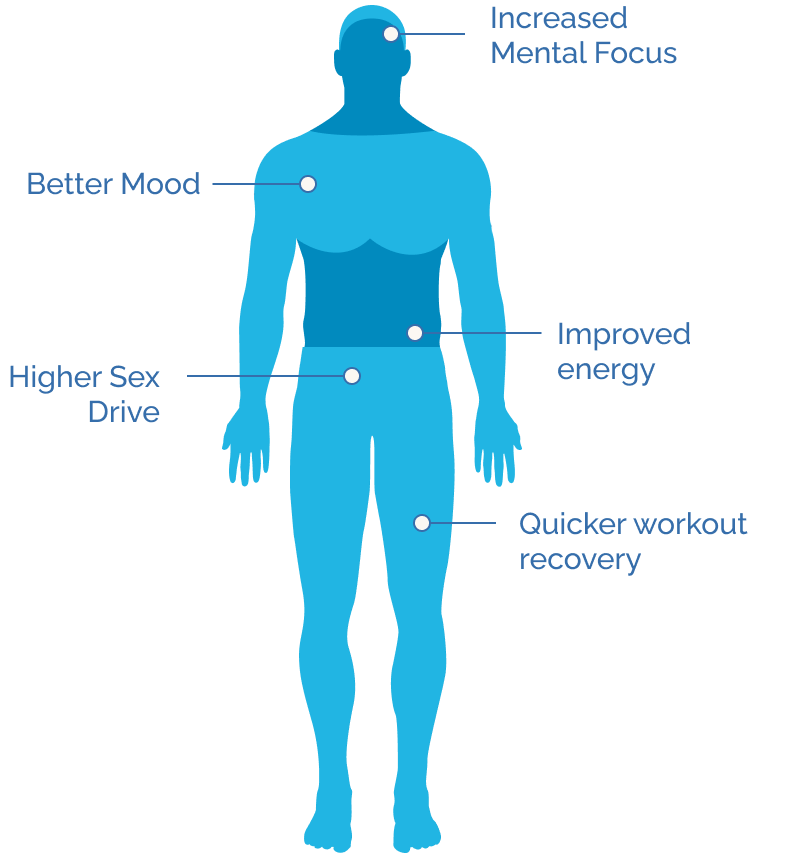
Men with low testosterone may experience fatigue and reduced energy levels. Some patients may notice improvements with treatment, although fatigue can have many causes and increased energy is not guaranteed.
Mood and Well-Being
Testosterone deficiency can sometimes be associated with changes in mood and emotional well-being. Some men may experience modest improvements with TRT, but testosterone therapy is not an approved treatment for depression or anxiety.
Sexual Desire
Reduced libido is a recognized symptom of testosterone deficiency. For appropriately selected men, testosterone replacement therapy may improve sexual desire. Results vary, and TRT is not a guaranteed treatment for erectile dysfunction.
Sleep and Testosterone Health
Sleep disturbances and testosterone levels can be related. However, poor sleep has many possible causes, and TRT is not an established treatment for insomnia or sleep disorders. A medical evaluation can help identify factors contributing to your symptoms.
Concentration and Cognitive Symptoms
Some men with low testosterone report difficulty concentrating or experiencing brain fog. These symptoms can have many causes, and TRT has not been established as a treatment for improving memory, concentration, or cognitive performance.
Testosterone replacement therapy requires medical evaluation and ongoing monitoring. Not all symptoms are caused by testosterone deficiency, and individual treatment results vary.
Low-T symptoms can take the joy out of life
Low energy
•
Low sex drive
•
Muscle loss
•
Lack of focus
•
Weight gain
•
Poor sleep quality
•
Erectile dysfunction
•
Slow workout recovery
•
Brain fog
•
Low energy • Low sex drive • Muscle loss • Lack of focus • Weight gain • Poor sleep quality • Erectile dysfunction • Slow workout recovery • Brain fog •
Trusted by thousands since 2012
Bobby Carpenter
2002 National Champion Ohio State Buckeyes + 7 years in NFL

At Affinity Whole Health, we provide personalized testosterone replacement therapy (TRT) for men with medically diagnosed testosterone deficiency. Our experienced medical providers evaluate your symptoms, hormone levels, and health history to develop an individualized treatment plan when clinically appropriate. With ongoing medical monitoring and dedicated patient support, we're committed to helping you manage low testosterone with confidence.
-
Patients with Low Testosterone can experience fatigue and low energy levels which can reduce quality of life both personally and professionally. Improving Testosterone to a healthier level can elevate patients' energy levels.
-
When your hormones are out of balance, life can feel like a rollercoaster. Optimizing testosterone levels with Testosterone Replacement Therapy can have beneficial effects on your mood.
While Testosterone may not directly cause an increase in motivation to exercise, its effects on muscle growth, energy levels, and mood can contribute to a greater inclination to engage in physical activity.
Source: https://www.ncbi.nlm.nih.gov/pmc/articles/PMC2701485/ -
One of the benefits patients on Testosterone Replacement Therapy notice and appreciate is an increased sex drive, improved libido and reduced erectile dysfunction issues.
Source: https://www.ncbi.nlm.nih.gov/pmc/articles/PMC2701485/
-
Sleep disturbances and testosterone levels can be related. However, poor sleep has many possible causes, and testosterone replacement therapy is not an established treatment for insomnia or sleep disorders. A medical evaluation can help identify factors contributing to your symptoms.
-
Testosterone helps maintain bone mineral density. TRT reduces fracture risk by strengthening bones, especially important in aging men with T deficiency.
-
Low testosterone symptoms can overlap with other medical conditions. Your Affinity medical provider reviews your symptoms, testosterone levels, and health history to determine whether testosterone replacement therapy is an appropriate treatment option.
-
Cardiovascular health is an important consideration when evaluating testosterone replacement therapy (TRT). Your Affinity medical provider reviews your medical history, cardiovascular risk factors, and relevant laboratory results to determine whether treatment is appropriate. Ongoing monitoring helps support informed treatment decisions and identify potential risks.
-
Testosterone replacement therapy can increase red blood cell production and hematocrit levels. Your medical provider monitors relevant laboratory results during treatment and may adjust your care plan when clinically necessary to help manage potential risks.
The Affinity Difference
Dedicated Support Every Step of the Way
Affinity Whole Health is the only clinic that provides every patient a dedicated Patient Care Coordinator (PCC) for ongoing support.
Your Patient Care Coordinator is your dedicated point of contact, available to assist with appointment scheduling, questions, phone calls, and even secure text messaging. You won’t deal with 1-800 numbers or impersonal chatbots. Instead, you'll have a real, responsive person committed to guiding you throughout your hormone therapy journey.
Patient Care Coordinators are responsible for contacting potential patients, scheduling appointments and resolving patient issues. Their role is essential in delivering the high-quality, patient-first service that sets Affinity Whole Health apart in the field of hormone replacement therapy.
Lost your medication? Text your PCC.

Need to schedule labs? Call your PCC.

Question about your bill? Email your PCC.

All PCCs work in the clinic and speak with patients and medical providers every day. If you need anything, you can call, text or email your PCC.
Ally Donofrio
Columbus

Zac Richman
Indianapolis

Glen Goykhberg
Cleveland

Jen McGuire
Chicago

What Can Testosterone Replacement Therapy (TRT) Do for You?
At Affinity Whole Health, our men's health clinics specialize in personalized testosterone replacement therapy (TRT) for men with medically diagnosed testosterone deficiency. Our experienced medical providers evaluate your symptoms, testosterone levels, and health history to determine whether TRT is an appropriate treatment option.
We believe effective men's healthcare goes beyond quick prescriptions and rushed appointments. At Affinity, it's personal. You'll receive individualized medical guidance, a treatment plan tailored to your clinical needs when appropriate, and ongoing support from your dedicated Patient Care Coordinator.
Our goal is to help you understand your hormonal health and make informed treatment decisions with confidence.


Low testosterone in men is a growing health concern, but rarely talked about.
Low testosterone, also known as testosterone deficiency or Low T, is an important men's health concern that can affect sexual health and overall well-being.
Testosterone levels naturally change with age, but research suggests that age alone may not explain every change observed in men's hormone levels.
A study published in the Journal of Clinical Endocrinology & Metabolism identified a population-level decline in testosterone concentrations over time, even after accounting for age. These findings suggest that generational and other health-related factors may influence testosterone levels.
Although testosterone often declines gradually as men get older, a lower testosterone result does not automatically mean that treatment is necessary. A diagnosis of testosterone deficiency requires consideration of symptoms, laboratory findings, and relevant medical history.
For men with medically diagnosed testosterone deficiency, testosterone replacement therapy (TRT) may be an appropriate treatment option following a thorough clinical evaluation.
At Affinity Whole Health, our medical providers offer individualized testosterone testing, consultations, and ongoing care to help men understand their hormone health and explore appropriate treatment options.
Median Total Testosterone
How it Works
Getting Started with Testosterone Replacement Therapy is as easy as 1-2-3

Free TRT Evaluation
Getting started with Affinity Whole Health begins with a free evaluation. Share your symptoms and health concerns, and connect with a dedicated Patient Care Coordinator who will guide you through the next steps.


Labs and Consultation
Once your initial labs are complete, you’ll receive a free consultation with one of our experienced medical providers, either online or in person. Your provider will review your results and design a customized hormone therapy program tailored to your health needs and goals.

Prescription Delivery and Ongoing Support
If TRT is prescribed following your medical evaluation, your medication may be shipped discreetly, with free two-day shipping on eligible orders. Your Patient Care Coordinator and medical provider provide ongoing support and monitoring.
Prescription approval and delivery times may vary.

Real patients, real results
“The staff of Affinity Whole Health is amazing. I was experiencing some issues of low-t and wasn’t sure where to go, or what to expect. I had no idea they offered so many options to help me out and get me back in control of my health!
Ally responded almost immediately and had me scheduled the next day, they do blood work in house, and the Doctors are very knowledgeable! Such an awesome experience! I’m a customer for life!”
Ryan C. / TRT Treatment
Read review

“I have been with Affinity for over 7 years for testosterone therapy and highly recommend them to anyone experiencing low level stage of life issues! I am 57 years old.
I began experiencing low energy, sex drive, loss of muscle mass to name a few. I can't imagine my quality of life had I not found them. HIGHLY RECOMMEND!!”
Jeff K. / TRT Treatment
Affinity Patient Since 2017
Read review

“ I can’t say enough good things about this entire practice. The people I’ve spoke to over the phone and met at the office were always nice and welcoming. Glen has also been extremely informative and responsive to all my questions. I have used other TRT practices in the past and was blown away with how professional and helpful this one was. I will be one of their clients for life. Keep up the great work. Thank you!”
Travis L. / TRT Treatment
Affinity Patient Since 2021
Read review

“ The Programs are great, I haven't felt this good in years! Friendly and knowledgeable staff, always available to answer any questions or help with any issues. Would highly recommend for any guy looking to just feel better or maximize the control of their health.”
Jake K. / TRT Treatment
Affinity Patient Since 2020
Read review

Frequently Asked Questions About Testosterone Replacement Therapy (TRT)
Curated by: Michael Koehler, MD
Affinity's Medical Director

-
Testosterone deficiency, also called low testosterone or male hypogonadism, is a medical condition in which the body does not produce enough testosterone to support normal physiological functions.
It may result from conditions affecting the testes, pituitary gland, or hypothalamus. Certain medical conditions, medications, and other health factors can also contribute to lower testosterone levels.
Although testosterone levels often decline with age, aging alone does not establish a diagnosis of testosterone deficiency. Medical evaluation considers symptoms, laboratory results, and potential underlying causes.
Learn more: Cleveland Clinic's Guide to Low Testosterone.
-
Symptoms may include:
Reduced sex drive
Erectile dysfunction or fewer spontaneous erections
Persistent fatigue or low energy
Depressed mood
Reduced concentration
Loss of body hair
Reduced bone density
Changes in muscle mass or strength
These symptoms can also occur with other health conditions and do not confirm testosterone deficiency on their own.
An Affinity medical provider can evaluate symptoms alongside laboratory findings.
Learn more: Urology Care Foundation.
-
Diagnosis involves a review of symptoms and medical history together with blood testing.
Total testosterone measures testosterone circulating in the blood. Free testosterone measures the small fraction not bound to proteins and may add useful context when total testosterone is borderline or sex hormone-binding globulin (SHBG) is altered.
The American Urological Association recommends two separate early-morning total testosterone measurements to confirm testosterone deficiency.
Affinity's providers individualize evaluations based on clinical circumstances and available results. This does not change the guideline recommendation.
Learn more: Free Testosterone: Why Measuring the Active Hormone Matters More Than Total Testosterone.
-
Your Affinity provider reviews relevant laboratory results before deciding whether testosterone replacement therapy is appropriate.
Testing may include total testosterone, free testosterone when indicated, SHBG, complete blood count, and other tests selected according to your history, symptoms, and clinical findings.
Additional testing may help identify the cause of testosterone deficiency and assess treatment risks.
If you have recent results, you can share them with Affinity. Your provider will decide whether further testing is needed.
Learn more: Essential Labs for Testosterone Therapy.
-
Treatment can begin only after a medical provider completes an appropriate evaluation and determines that TRT is indicated.
If a prescription is issued, Affinity offers free two-day shipping for eligible orders. Processing and delivery depend on pharmacy operations, medication availability, and shipping conditions.
An evaluation does not guarantee a prescription or a specific treatment start date.
Your Patient Care Coordinator can explain the next steps.
-
Testosterone reference ranges vary with age, laboratory methods, and individual health factors.
The American Urological Association uses a total testosterone level below 300 ng/dL as a reasonable cutoff supporting a diagnosis in men, but a single result is not a stand-alone treatment criterion.
When clinically indicated, free testosterone and SHBG may help interpret borderline or discordant results.
Your provider considers symptoms, repeat testing as recommended by guidelines, and your overall health.
-
The timeline varies by person and symptom.
Some men with confirmed testosterone deficiency notice changes in sexual interest or other symptoms within several weeks. Other effects may take longer, and not every symptom improves with treatment.
Your provider will review your response and follow-up testing.
TRT is not intended to produce immediate or guaranteed improvements in energy, mood, or physical performance.
-
Potential effects include:
Acne or oily skin
Increased red blood cell count (hematocrit)
Reduced sperm production and fertility
Breast tenderness
Fluid retention
Worsening of certain preexisting conditions, such as untreated severe obstructive sleep apnea
Testosterone therapy may affect blood pressure and requires assessment of cardiovascular health and other relevant risks.
Your provider will review contraindications, fertility goals, and monitoring before treatment.
-
Program pricing varies by prescribed treatment, dosage, and duration.
Affinity describes its pricing as including prescribed medications, applicable supplements and supplies, shipping and handling, follow-up laboratory work, and follow-up consultations as specified in your program.
There is no membership fee.
A dedicated Patient Care Coordinator can help with scheduling and questions.
Confirm your specific program inclusions and total cost with Affinity before enrolling.
Learn more: What Is a Patient Care Coordinator?.
-
An Affinity medical provider reviews your symptoms, laboratory findings, medical history, and relevant health concerns.
The provider discusses whether the findings support testosterone deficiency and whether TRT is medically appropriate.
If treatment is recommended, you can discuss options, potential benefits, side effects, fertility considerations, and monitoring.
A consultation does not automatically result in a prescription.
-
No. Affinity Whole Health does not currently offer testosterone pellet therapy.
Pellets are implanted under the skin and release testosterone over time. The dose cannot be easily adjusted or discontinued immediately after insertion.
Your provider can discuss treatment options available through Affinity and determine whether any are appropriate for your medical needs.
-
Follow-up care includes review of symptoms, testosterone levels, and relevant safety measurements, including hematocrit when appropriate.
Your provider determines testing and consultation intervals based on your health and treatment plan, including after treatment initiation or dose changes.
Your dedicated Patient Care Coordinator can assist with scheduling and ongoing communication.
-
TRT may be appropriate for men who have symptoms or signs of testosterone deficiency together with laboratory evidence supporting the diagnosis, after appropriate clinical evaluation.
Your provider will consider:
Total testosterone levels
Free testosterone when indicated
Possible causes of testosterone deficiency
Medical history
Fertility goals
Contraindications
Potential treatment risks
Not everyone with fatigue, sexual symptoms, or a borderline testosterone result needs TRT.
-
Yes. Some men have total testosterone within a laboratory reference range but lower free testosterone, especially when SHBG is elevated.
Reliable free testosterone assessment may provide additional information when symptoms and total testosterone results do not align.
Low free testosterone alone does not automatically establish a diagnosis or qualify someone for TRT.
Your provider interprets it alongside symptoms, laboratory methods, and other findings.
Learn more: Free Testosterone: Why Measuring the Active Hormone Matters More Than Total Testosterone.
-
TRT can be prescribed for ongoing treatment in appropriately selected men with diagnosed testosterone deficiency, but it requires continued medical supervision and periodic reassessment.
Monitoring may include:
Symptoms and treatment response
Testosterone levels
Hematocrit
Blood pressure
Other factors appropriate to your health
TRT can suppress sperm production and is not suitable for everyone.
Your provider will review the benefits, risks, and ongoing need for treatment.