
Medically reviewed by Dr. Michael Koehler, MD
For years, adult obesity rates in the U.S. climbed steadily. Then something changed.
New data from Epic, one of the largest electronic health record systems in the country, shows that the long-term rise in obesity has reversed. This isn’t based on a small survey — it comes from Epic’s Cosmos dataset, representing hundreds of millions of patient records.
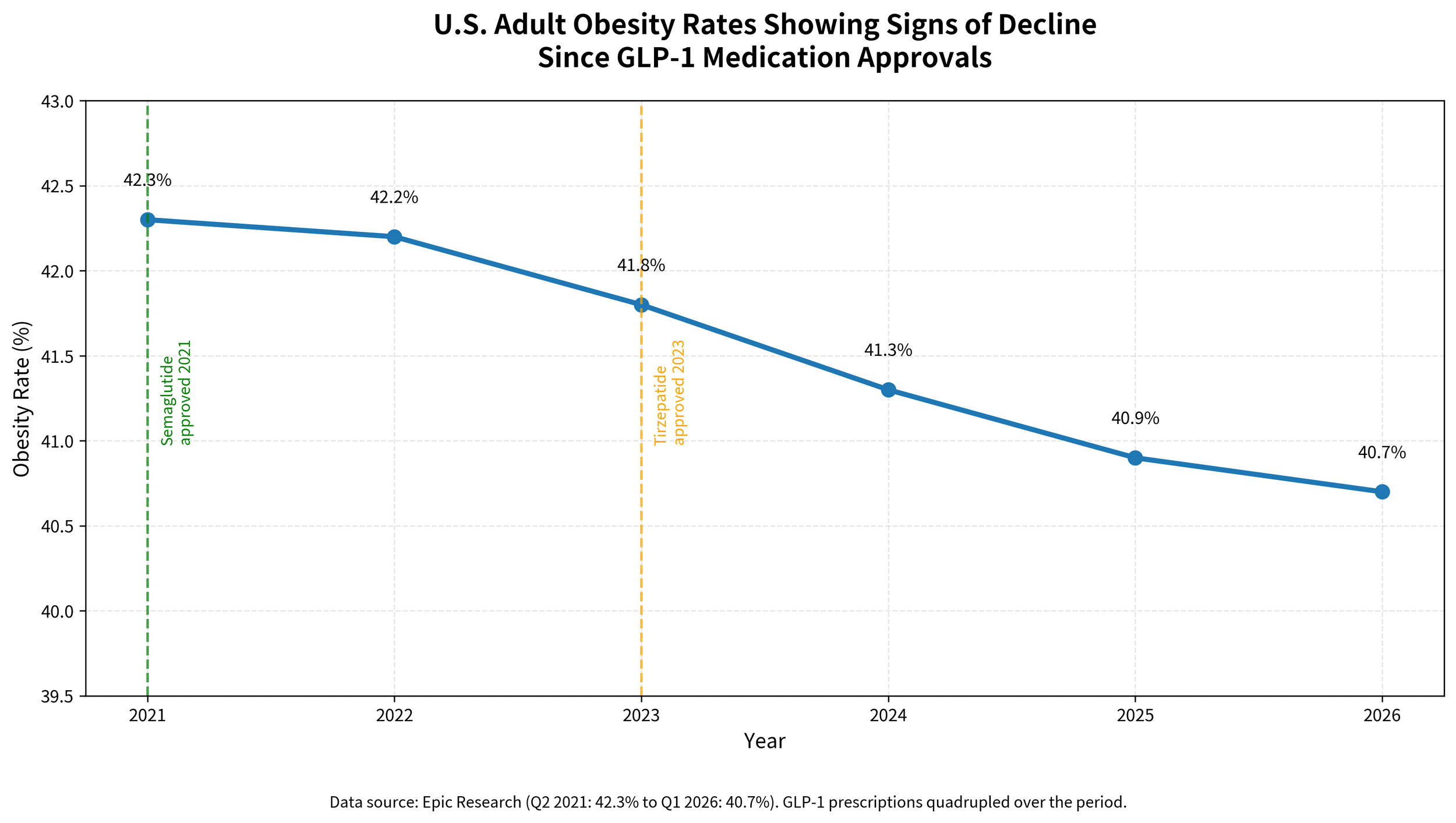
The Data: A Clear Reversal
According to Epic Research, the share of adults classified as obese fell from 42.3% in Q2 2021 to 40.7% in Q1 2026. Over the same period, the proportion of adults in the healthy weight range increased modestly.
This represents a meaningful population-level shift after more than a decade of consistent increases. The decline began around the time highly effective GLP-1 medications for weight loss first became widely available and has continued as adoption has grown.
Timing Strongly Aligns with GLP-1 Approvals and Adoption
Semaglutide received FDA approval for chronic weight management in December 2021.
Tirzepatide followed with approval in December 2023.
GLP-1 medication use more than quadrupled during this window. The timing is difficult to overlook: obesity rates began declining shortly after semaglutide’s approval and have continued downward as tirzepatide adoption has expanded.
These medications work by mimicking gut hormones that reduce appetite, slow gastric emptying, and improve metabolic signaling — mechanisms that produce clinically meaningful and sustained weight loss for most patients.
A Plausible Driver at Population Scale
While observational data cannot prove causation on its own, the temporal association is strong:
The decline started immediately after the first highly effective GLP-1 weight-loss medication became available.
It has persisted and appears to be continuing as a second, even more potent option gained traction.
No other intervention in recent years has achieved this scale of uptake combined with this magnitude of average weight loss.
The biological mechanisms of GLP-1 medications are well-established and consistent with meaningful, sustained results.
Other factors may contribute, but the timing and scale strongly suggest GLP-1 therapies are a primary driver of the observed reversal.
What This Means for Patients
Seeing population-level data move in the right direction is encouraging. It indicates that the significant weight loss seen in clinical trials is translating into real-world impact as these medications have become more accessible.
At Affinity Whole Health, we have extensive experience with GLP-1 therapies. Since semaglutide was first approved for weight loss in 2021, we have treated hundreds of patients with these medications. We’ve helped individuals achieve meaningful, sustainable results through personalized dosing, close medical supervision, and integrated support that includes nutrition guidance, strength training, and — when appropriate — hormone optimization and peptide therapies to support muscle preservation and overall metabolic health.
We offer high-quality compounded semaglutide and compounded tirzepatide through licensed, FDA-registered compounding pharmacies when clinically appropriate. These customized formulations allow for flexible, individualized dosing and are provided under strict medical oversight.
Please note: Compounded medications are not FDA-approved. They are prepared for individual patients whose needs may not be fully met by commercially available products.
The Bottom Line
After more than a decade of rising obesity rates, one of the largest real-world health datasets in the country now shows a clear reversal. The timeline closely tracks the introduction and rapid adoption of GLP-1 medications.
These therapies are not magic and work best as part of a comprehensive approach. But the data increasingly supports what we’ve observed in our own practice for years: GLP-1 medications, when used thoughtfully and with proper support, can be powerful weight-loss tools for lasting change.
If you’ve been struggling with weight and wondering whether these options could be part of your solution, the emerging real-world evidence — combined with our years of hands-on experience — makes this worth exploring.
Ready to discuss what might be right for you? Schedule a consultation with our team to learn more about semaglutide, tirzepatide, or a personalized metabolic health program.
This article is for educational purposes only and is not medical advice. Always consult with a licensed healthcare provider before starting treatment. Compounded medications are not FDA-approved.