
Minoxidil Side Effects: Topical vs. Oral Risks, What’s Common, and When to Worry
Minoxidil is one of the most widely used medications for hair loss. It is available as topical solutions and foams applied directly to the scalp, while low-dose oral minoxidil has become increasingly used off-label by clinicians for several forms of hair loss.
But topical and oral minoxidil should not be treated as though they have identical safety profiles.
For most people using topical minoxidil, the most common problems involve the scalp, including itching, irritation, redness, dryness, and sometimes unwanted facial hair growth. Topical minoxidil labeling also instructs users to stop treatment and contact a healthcare professional if they develop symptoms such as chest pain, rapid heartbeat, dizziness, unexplained weight gain, or swelling of the hands or feet.
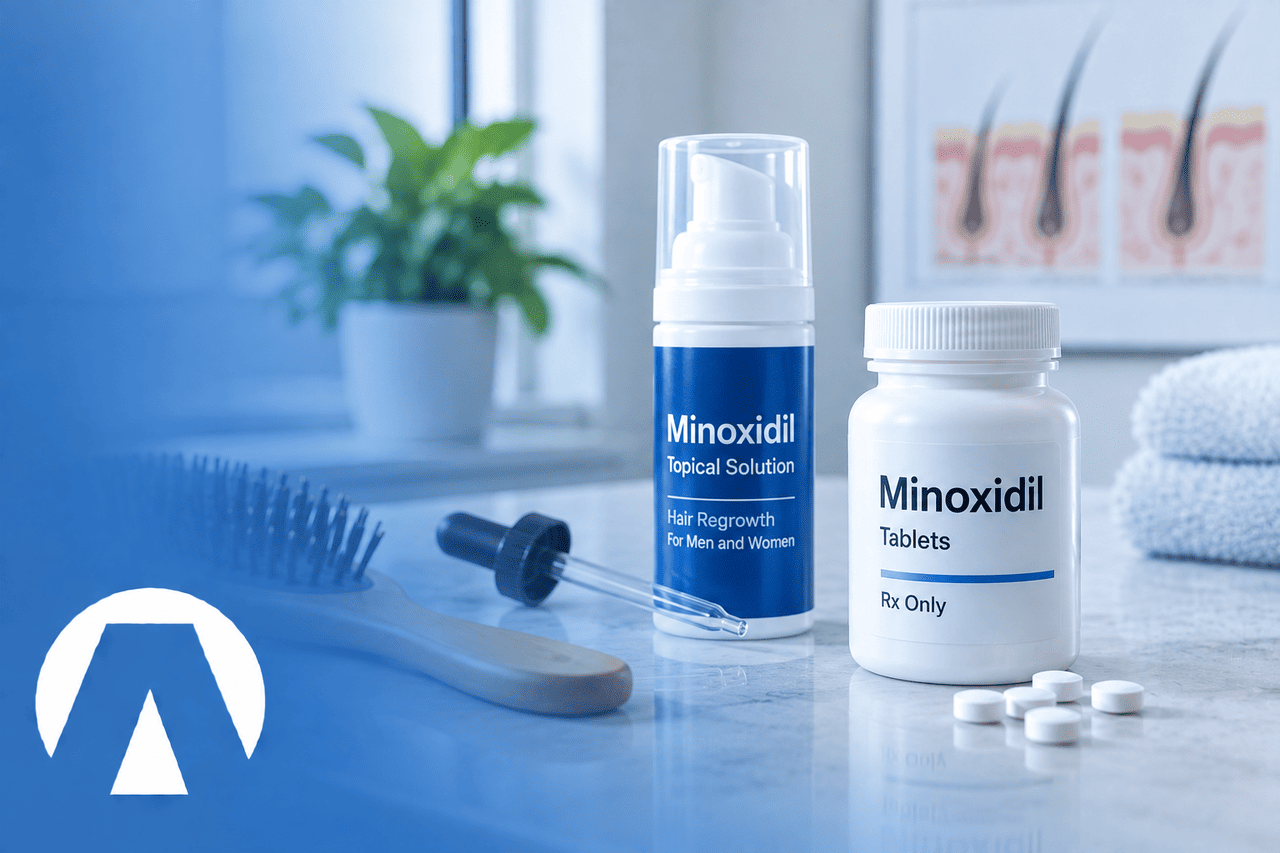
Oral minoxidil is different. Minoxidil tablets were developed as a powerful blood-pressure medication. Oral minoxidil is not FDA-approved for hair loss, meaning low-dose oral minoxidil for alopecia is an off-label use. The prescription tablet carries a boxed warning because minoxidil at antihypertensive doses can produce serious cardiovascular complications, including pericardial effusion that can occasionally progress to cardiac tamponade.
That does not mean people taking the much smaller doses commonly used for hair loss face the same risk as patients receiving higher antihypertensive doses. Recent studies of low-dose oral minoxidil generally report a more favorable safety profile, with excessive hair growth, or hypertrichosis, being the most frequent adverse effect. However, cardiovascular effects remain clinically relevant, and long-term safety data are still developing.
This distinction is essential when discussing minoxidil side effects.
In this guide, we examine what current research and prescribing information show about topical minoxidil, minoxidil foam, oral minoxidil pills, side effects in men and women, temporary hair shedding, cardiovascular effects, sexual side effects, cancer concerns, beard use, long-term treatment, and the symptoms that warrant medical attention.
Quick answer: Topical minoxidil most commonly causes scalp-related effects such as itching and irritation, while unwanted facial hair can also occur. Low-dose oral minoxidil can cause hypertrichosis, fluid retention, dizziness, increased heart rate, and other cardiovascular effects. Serious cardiovascular complications are emphasized in the FDA labeling for oral minoxidil used as an antihypertensive medication, although hair-loss treatment typically involves much lower off-label doses and should not be assumed to carry the same risk profile.
What Is Minoxidil?
Minoxidil has an unusual history among hair-loss medications.
It was originally developed as an oral antihypertensive medication. During treatment, clinicians observed increased hair growth in some patients. That effect eventually led to the development of topical minoxidil specifically for hair regrowth.
Today, minoxidil can broadly be encountered in two forms:
Topical minoxidil, which is applied directly to the scalp.
Oral minoxidil, which is swallowed as a tablet.
These routes should not be considered interchangeable from a safety standpoint.
Topical minoxidil is widely available over the counter in the United States in hair-regrowth formulations.
Oral minoxidil is a prescription medication approved for hypertension. Using oral minoxidil to treat hair loss is an off-label use.
An international expert consensus published in JAMA Dermatology acknowledged that low-dose oral minoxidil has increasingly been used for hair loss while emphasizing that larger trials and standardized guidance remain limited. Forty-three hair-loss specialists from 12 countries participated in developing that consensus.
How Does Minoxidil Work for Hair Loss?
The precise mechanisms responsible for minoxidil's hair-growth effects are complex and are not completely explained by simply saying that it "increases blood flow."
Minoxidil is a potassium-channel opener and vasodilator. Its effects on hair follicles appear to involve changes in follicular cycling and potentially several cellular and vascular pathways.
Clinically, the important result is that minoxidil can help some miniaturized follicles remain in or transition into the active growth phase of the hair cycle.
That does not mean every person with hair loss will benefit.
Hair loss has many potential causes, including:
androgenetic alopecia
telogen effluvium
alopecia areata
iron deficiency
thyroid disorders
significant weight loss
illness
medications
nutritional deficiencies
inflammatory scalp disease
scarring alopecia
Minoxidil may be useful for certain types of hair loss, but unexplained, sudden, patchy, or inflammatory hair loss should be properly evaluated rather than automatically treated with over-the-counter minoxidil.
Current OTC labeling specifically cautions against self-treatment when hair loss is sudden or patchy, associated with childbirth, unexplained, or accompanied by a red, infected, irritated, inflamed, or painful scalp.
Does Minoxidil Have Side Effects?
Yes.
Both topical and oral minoxidil can cause side effects.
However, the side effects of minoxidil depend substantially on how the medication is administered.
Topical minoxidil primarily exposes the scalp to the medication, although some systemic absorption can occur.
Oral minoxidil exposes the entire body to the medication and therefore has greater potential for systemic cardiovascular effects.
This distinction is one of the most important points in this article.
Someone researching "minoxidil side effects" should always ask:
Are we talking about topical minoxidil or oral minoxidil?
What Are the Side Effects of Minoxidil?
Potential minoxidil side effects can include:
scalp itching
scalp irritation
redness
dryness or flaking
unwanted facial or body hair
temporary increased hair shedding
changes in hair texture or color
headache
dizziness or lightheadedness
increased heart rate
palpitations
fluid retention
swelling of the hands, feet, or ankles
unexplained weight gain
changes in blood pressure
The likelihood and significance of these effects differ greatly between topical and oral treatment.
Serious cardiovascular adverse effects are a much greater consideration with systemic oral minoxidil than with correctly used topical treatment.
Topical Minoxidil Side Effects
For people using minoxidil solution directly on the scalp, the most common problems are generally local.
Current 5% topical minoxidil labeling identifies itching and skin irritation of the treated scalp as the most common side effects.
Other potential topical minoxidil side effects include:
scalp redness
dryness
itching
burning
irritation
flaking
contact dermatitis
unwanted facial hair
changes in hair texture
changes in hair color
Some of these symptoms may result from minoxidil itself, while others can be related to ingredients in a particular formulation.
That becomes relevant when comparing minoxidil liquid with foam.
Why Can Topical Minoxidil Irritate the Scalp?
Liquid minoxidil formulations commonly contain ingredients such as:
alcohol
propylene glycol
purified water
These ingredients help dissolve minoxidil and facilitate topical delivery.
However, alcohol and propylene glycol can contribute to scalp irritation in susceptible individuals.
The official labeling for some 5% solutions specifically notes that the alcohol content can cause burning or irritation if the product reaches the eyes.
Someone experiencing persistent itching, redness, burning, or scaling may therefore be reacting to:
minoxidil itself,
another ingredient in the formulation,
an unrelated scalp condition,
or a combination of these factors.
Persistent inflammation should not simply be ignored in the hope that the scalp will "get used to it."
Minoxidil Foam Side Effects
Minoxidil foam was developed partly as an alternative to liquid formulations.
The overall pharmacologic ingredient remains minoxidil, so the possibility of minoxidil-related adverse effects does not disappear.
However, formulation matters.
Some people who experience irritation with liquid minoxidil tolerate foam better, particularly when propylene glycol contributes to the irritation.
Potential minoxidil foam side effects can still include:
itching
redness
dryness
scalp irritation
unwanted facial hair
temporary shedding
systemic symptoms if meaningful absorption occurs
Switching formulations may help some people with local intolerance, but persistent scalp inflammation should still be evaluated.
Can Minoxidil Cause Hair Shedding?
Yes.
Temporary increased shedding can occur after starting minoxidil.
This can be alarming because someone beginning a hair-growth medication may suddenly feel that they are losing more hair.
However, early shedding does not necessarily mean minoxidil is permanently damaging follicles.
Minoxidil alters the hair-growth cycle. As follicular cycling changes, some existing hairs may be shed as follicles transition toward another growth phase.
This is sometimes called the minoxidil shedding phase.
Importantly, not everyone experiences noticeable shedding.
And not every episode of increased hair loss after starting minoxidil should automatically be dismissed as a harmless treatment response.
How Long Does Minoxidil Shedding Last?
There is no exact timeline that applies to every patient.
When early shedding is related to changes in the hair cycle, it is generally expected to be temporary.
However, persistent or severe hair loss deserves further evaluation.
Someone continuing to lose substantial amounts of hair could have:
progressive androgenetic alopecia
telogen effluvium
nutritional deficiency
thyroid disease
medication-related shedding
inflammatory scalp disease
another form of alopecia
This is particularly important when shedding is sudden, patchy, associated with scalp inflammation, or accompanied by other systemic symptoms.
Minoxidil should not become a reason to delay diagnosing another medical cause of hair loss.
Does Minoxidil Make Hair Loss Worse?
Minoxidil does not generally "destroy" hair follicles and permanently worsen androgenetic alopecia.
The confusion usually comes from two situations.
First, some people notice increased shedding shortly after beginning treatment.
Second, hair supported by minoxidil can be lost after treatment is discontinued.
These are different phenomena.
The OTC labeling emphasizes that continued treatment is necessary to maintain minoxidil-associated hair regrowth and that hair loss will begin again after treatment is stopped.
This does not mean minoxidil created a new hair-loss disorder.
It means the pharmacologic benefit generally depends on continued treatment.
What Happens When You Stop Minoxidil?
Minoxidil is generally a maintenance treatment.
If it is helping preserve or regrow hair, discontinuing it removes that therapeutic support.
Over time, hair gained or maintained because of minoxidil may be lost, and the underlying hair-loss process can continue.
This is an important consideration before beginning treatment.
Someone should not think of minoxidil as:
"Use it for three months, regrow the hair, and then stop permanently."
For androgenetic hair loss, continued use is generally necessary to maintain the benefit.
Unwanted Facial Hair From Minoxidil
Unwanted facial hair growth is a recognized potential side effect of topical minoxidil.
Current OTC labeling specifically instructs users to stop treatment and ask a doctor if unwanted facial hair growth occurs.
This can occur for several reasons.
Minoxidil may accidentally spread from the scalp onto the:
forehead
temples
cheeks
face
Transfer can also occur through hands, pillows, or dripping solution.
Some systemic absorption may contribute as well.
Women may find unwanted facial hair particularly bothersome, although it can occur in either sex.
Careful application and washing the hands after use may reduce accidental transfer.
Oral Minoxidil Side Effects
The safety discussion changes considerably when minoxidil is swallowed.
Oral minoxidil is a potent systemic vasodilator.
Its FDA-approved indication is hypertension, not hair loss.
The prescription label contains a boxed warning explaining that minoxidil tablets can produce serious adverse effects, including pericardial effusion that can occasionally progress to tamponade and worsening angina.
When dermatologists use minoxidil for hair loss, they commonly use doses substantially below traditional antihypertensive dosing. This practice is usually described as low-dose oral minoxidil, or LDOM.
That distinction is essential.
The boxed warning should not be ignored simply because a lower dose is being used.
But it is equally misleading to assume that adverse-event rates from high-dose hypertension treatment directly predict the risk from modern low-dose hair-loss treatment.
Is Oral Minoxidil FDA-Approved for Hair Loss?
No.
Oral minoxidil tablets are not FDA-approved for treating hair loss.
Their approved use is treatment of hypertension in appropriately selected patients.
Prescribing a medication off-label is a recognized part of medical practice, but "commonly prescribed" and "FDA-approved for that indication" are not synonymous.
An international consensus of hair-loss specialists published in JAMA Dermatology explicitly describes low-dose oral minoxidil for hair loss as off-label. The experts developed recommendations regarding patient selection, precautions, contraindications, baseline evaluation, monitoring, and consultation because standardized guidelines and larger clinical trials remain limited.
This is particularly important for medical marketing.
Oral minoxidil should not be described as an FDA-approved oral hair-loss medication.
How Common Are Oral Minoxidil Side Effects?
The answer depends on:
dose
patient population
sex
age
underlying health
definition of an adverse event
length of treatment
study design
A 2025 systematic review and meta-analysis evaluated 27 studies involving 2,933 patients treated with oral minoxidil for alopecia. Across those studies, the pooled incidence of adverse events was approximately 27%, although study designs and treatment protocols varied considerably.
That number does not mean 27% of patients experienced dangerous complications.
Many reported events were cosmetic or relatively mild, particularly increased body or facial hair.
A 2025 narrative review found that hypertrichosis was the most frequent low-dose oral minoxidil adverse effect, occurring in approximately 15% of patients in the reviewed literature.
Understanding the type of adverse event is therefore just as important as knowing the overall percentage.
Hypertrichosis From Oral Minoxidil
Hypertrichosis means increased hair growth in areas where the patient may not want additional hair.
It is the most consistently reported side effect of low-dose oral minoxidil.
Unlike topical treatment, oral minoxidil circulates systemically. It cannot selectively stimulate only the follicles on the scalp.
Additional hair can therefore appear on areas such as:
face
arms
legs
chest
back
other body regions
The 2025 narrative review estimated hypertrichosis in approximately 15% of patients, with greater frequency among women and with higher doses.
For some patients, this is a manageable cosmetic issue.
For others, it is significant enough to discontinue treatment.
Does Oral Minoxidil Cause Fluid Retention?
It can.
Fluid retention is an important systemic adverse effect because minoxidil's vasodilatory effects can trigger physiologic responses that promote sodium and water retention.
A 2025 review of low-dose oral minoxidil literature estimated fluid retention in approximately 1.3% to 10% of patients, with greater frequency among women. It typically appeared within the first one to three months of treatment in the reviewed data.
Possible manifestations include:
ankle swelling
foot swelling
hand swelling
facial puffiness
rapid unexplained weight gain
These symptoms deserve medical attention rather than simply being treated as a cosmetic inconvenience.
Minoxidil and Swollen Ankles
Ankle edema is one of the more recognizable manifestations of fluid retention.
It may present as:
sock marks becoming unusually deep
puffiness around the ankles
shoes feeling tighter
swelling worsening later in the day
rapid weight changes
Swelling has many possible causes, including heart, kidney, liver, venous, and medication-related conditions.
A patient taking oral minoxidil should therefore report new edema to the prescribing clinician.
Even topical minoxidil labeling advises stopping treatment and asking a doctor if swelling of the hands or feet occurs.
Can Minoxidil Cause Weight Gain?
Minoxidil does not typically cause weight gain by directly increasing body fat.
However, fluid retention can increase body weight.
A sudden increase in scale weight accompanied by swelling is therefore more concerning than gradual changes attributable to diet or body composition.
Current topical labeling specifically identifies sudden unexplained weight gain as a reason to stop use and contact a healthcare professional.
This warning is especially relevant for oral minoxidil because systemic exposure is much greater.
Can Oral Minoxidil Cause Dizziness?
Yes.
Dizziness or lightheadedness can occur because minoxidil is a vasodilator and can influence blood pressure.
A 2024 systematic review and meta-analysis examining low-dose oral minoxidil found that hypotensive symptoms were reported in approximately 5% of patients, although the analysis did not identify documented hypotensive episodes in the included studies.
This distinction is useful.
Feeling dizzy does not necessarily mean a patient experienced clinically significant measured hypotension.
But recurrent dizziness, fainting, or symptoms that interfere with normal activities deserve evaluation.
Does Low-Dose Oral Minoxidil Lower Blood Pressure?
Interestingly, the effect may be relatively modest at the low doses used for hair loss in many patients.
The 2024 systematic review and meta-analysis found no significant overall change in systolic or diastolic blood pressure with low-dose oral minoxidil.
However, heart rate increased modestly by an average of approximately 2.67 beats per minute.
These findings are reassuring but should not be overinterpreted.
The authors noted limitations including:
lack of control groups in some studies
variable dosing
differences in blood-pressure monitoring
The results therefore do not establish that low-dose oral minoxidil has no cardiovascular effects or is appropriate for every patient.
Minoxidil and Rapid Heart Rate
Minoxidil can increase heart rate.
When blood vessels dilate, the cardiovascular system may compensate with increased sympathetic activity.
Some patients describe this as:
rapid heartbeat
racing heart
pounding heartbeat
palpitations
The recent low-dose oral minoxidil literature suggests tachycardia and other cardiovascular adverse events occur in a minority of patients and are usually mild and transient, but they remain clinically important.
Persistent tachycardia, significant palpitations, chest discomfort, fainting, or shortness of breath should not be ignored.
Does Minoxidil Cause Heart Palpitations?
It can.
Palpitations refer to awareness of the heartbeat and may feel like:
pounding
racing
fluttering
skipped beats
Not every palpitation represents a dangerous arrhythmia.
But it is impossible to determine the cause based solely on the sensation.
New or significant palpitations while taking oral minoxidil should be discussed with the prescribing clinician.
Current topical minoxidil labeling also tells users to stop treatment and ask a doctor if a rapid heartbeat occurs.
What Is the Pericardial Effusion Warning for Oral Minoxidil?
This is one of the most important distinctions between topical and oral minoxidil.
The FDA-approved prescription labeling for minoxidil tablets contains a boxed warning stating that oral minoxidil may cause pericardial effusion, occasionally progressing to cardiac tamponade. It can also exacerbate angina pectoris.
The pericardium is the sac surrounding the heart.
A pericardial effusion is an abnormal accumulation of fluid within that space.
If sufficient fluid accumulates and begins compressing the heart, cardiac tamponade can occur. This is a medical emergency.
Does Low-Dose Oral Minoxidil Cause Pericardial Effusion?
This question requires careful interpretation.
The boxed warning is based on systemic oral minoxidil's approved use as a potent antihypertensive medication.
Low-dose oral minoxidil for hair loss generally involves much lower doses.
Available hair-loss studies suggest serious cardiovascular complications are uncommon at low doses, but the evidence base is not strong enough to declare the risk zero. Long-term safety is also one of the areas that the international expert consensus identified as requiring additional research.
Therefore, these statements would both be inappropriate:
"Low-dose oral minoxidil commonly causes pericardial effusion."
and
"Pericardial effusion cannot happen at hair-loss doses."
The more accurate conclusion is that serious cardiovascular complications appear uncommon in published low-dose hair-loss cohorts, but oral minoxidil retains systemic pharmacology and requires appropriate patient selection.
Who Should Be Careful With Oral Minoxidil?
Because oral minoxidil is a systemic cardiovascular medication, medical history matters.
The 2024 international expert consensus specifically addressed contraindications, precautions, baseline evaluation, monitoring, and circumstances requiring specialty consultation.
Relevant issues can include:
cardiovascular disease
blood-pressure problems
history of significant edema
kidney disease
medications that affect blood pressure
medications that affect fluid balance
history of tachycardia or rhythm problems
pregnancy considerations
This does not mean every patient requires the same testing or monitoring.
It means oral minoxidil should be treated as a prescription systemic medication rather than as an oral version of an over-the-counter scalp product.
Is Low-Dose Oral Minoxidil Safe?
Current evidence is generally encouraging for appropriately selected patients, but "safe" should not be interpreted as "risk-free."
A 2025 review found the most frequent adverse effect was hypertrichosis at approximately 15%. Fluid retention occurred in roughly 1.3% to 10%, while cardiovascular adverse effects such as tachycardia and dizziness occurred in fewer than 5% of patients and were generally mild and transient.
A 2024 meta-analysis found no significant average change in systolic or diastolic blood pressure but identified a small average increase in heart rate and hypotensive symptoms in about 5% of patients.
At the same time, expert consensus authors emphasized that larger studies are needed and specifically identified long-term safety as an area requiring further investigation.
That is the appropriate balance.
Oral Minoxidil Side Effects vs. Topical Minoxidil Side Effects
The easiest way to understand the difference is by thinking about local versus systemic exposure.
Topical minoxidil primarily produces:
scalp irritation
itching
redness
dryness
unwanted hair growth
Oral minoxidil is more likely to produce systemic effects such as:
hypertrichosis
fluid retention
edema
dizziness
changes in heart rate
palpitations
Rare serious cardiovascular complications are primarily a concern with systemic exposure.
This does not mean topical minoxidil can never cause systemic symptoms.
Official topical labeling still tells patients to stop use and contact a doctor if they develop chest pain, rapid heartbeat, faintness, dizziness, sudden unexplained weight gain, or swelling of the hands or feet.
Minoxidil Side Effects in Men
Minoxidil side effects in men depend much more on route, formulation, and dose than on sex alone.
For men using topical minoxidil, common concerns include:
scalp irritation
itching
redness
unwanted hair growth
early shedding
Men taking oral minoxidil may experience:
increased body hair
edema
dizziness
palpitations
increased heart rate
Some men are particularly concerned about sexual function because they associate hair-loss medications with finasteride.
Minoxidil and finasteride are very different medications.
Minoxidil Side Effects in Women
Women can experience many of the same minoxidil adverse effects as men.
However, hypertrichosis may be particularly relevant.
The 2025 low-dose oral minoxidil safety review found increased hair growth was more frequent among women and at higher doses.
Additional facial or body hair can be a significant cosmetic issue even when it is medically harmless.
Women also require careful consideration of pregnancy and breastfeeding.
Current OTC topical minoxidil labeling states that the product may be harmful when used during pregnancy or breastfeeding.
Women who are pregnant, trying to become pregnant, or breastfeeding should therefore discuss hair-loss treatment with their healthcare professional rather than self-treating.
Minoxidil Side Effects Sexually: Does Minoxidil Cause Sexual Dysfunction?
This is an increasingly common search query.
The key distinction is between minoxidil and finasteride.
Sexual dysfunction is a recognized adverse-effect concern with finasteride. Minoxidil works through a completely different pharmacologic mechanism.
Sexual dysfunction is not considered a typical established adverse effect of topical or low-dose oral minoxidil in the way it is for finasteride.
That does not mean nobody taking minoxidil has ever reported:
erectile dysfunction
decreased libido
ejaculation changes
other sexual symptoms
Individual symptoms can occur during any treatment.
But a symptom occurring after a medication is started does not by itself establish that the medication caused it.
Can Minoxidil Cause Erectile Dysfunction?
Erectile dysfunction is not a characteristic established adverse effect in standard topical minoxidil labeling or a prominent signal in modern low-dose oral minoxidil hair-loss studies.
That is different from saying it is biologically impossible for a patient to experience erectile changes while taking minoxidil.
Erectile function can be affected by:
cardiovascular disease
blood-pressure changes
testosterone deficiency
medications
stress
depression
anxiety
sleep disorders
alcohol
smoking
diabetes
relationship factors
If erectile dysfunction begins during minoxidil therapy, a clinician can evaluate both the medication and these other potential contributors.
Affinity Whole Health provides erectile dysfunction treatment focused on identifying the potential causes of ED rather than assuming every case has the same origin.
Can Minoxidil Lower Libido?
Reduced libido is not considered one of minoxidil's characteristic adverse effects.
This is another area where online discussion can blur together minoxidil and finasteride.
Minoxidil does not inhibit 5-alpha reductase and does not work by lowering DHT.
If a patient develops significant loss of libido, other explanations may include:
testosterone deficiency
depression
anxiety
sleep deprivation
medications
chronic illness
relationship factors
substantial calorie restriction
other hormonal issues
A symptom deserves evaluation even when it is not a well-established medication effect.
Does Minoxidil Affect Testosterone?
Minoxidil is not a testosterone-suppressing medication.
It does not treat hair loss by inhibiting testosterone production.
It also does not work through the same DHT pathway targeted by finasteride.
Therefore, experiencing fatigue, low libido, or erectile dysfunction while using minoxidil should not automatically lead someone to conclude:
"Minoxidil lowered my testosterone."
If symptoms suggest possible hypogonadism, appropriate clinical evaluation and laboratory testing can determine whether testosterone deficiency is actually present.
Affinity's guide to primary and secondary hypogonadism explains why symptoms alone are not sufficient to diagnose testosterone deficiency.
Minoxidil vs. Finasteride Side Effects
Although both medications are used for hair loss, their adverse-effect profiles are very different.
Finasteride alters androgen metabolism by inhibiting conversion of testosterone to DHT.
Minoxidil is a vasodilator with effects on hair cycling.
Consequently, sexual side effects are much more central to finasteride safety discussions.
Cardiovascular effects are much more relevant to systemic oral minoxidil.
Topical minoxidil is more commonly associated with local scalp reactions.
Readers considering both medications can review our detailed guide to finasteride side effects for a separate evidence-based discussion of sexual, reproductive, psychiatric, and long-term concerns.
Minoxidil Side Effects and Cancer
Another search query that deserves a direct answer is:
Does minoxidil cause cancer?
Current human evidence does not establish minoxidil as a cause of cancer when used appropriately for hair loss.
Cancer is not recognized as a typical clinical adverse effect of topical minoxidil.
People searching this question may encounter animal toxicology studies, laboratory experiments, case reports, or mechanistic discussions online. These sources can be easily misinterpreted when removed from their context.
An effect observed:
in cultured cells,
in animals,
at unusually high exposures,
or under experimental conditions
does not automatically establish human cancer risk at therapeutic exposure.
There is currently no good basis for telling patients that standard minoxidil hair-loss treatment is known to cause cancer.
At the same time, medical science generally avoids claiming that any drug has been proven to have "zero cancer risk" under every circumstance.
The evidence-based conclusion is that cancer is not an established adverse effect of minoxidil hair-loss therapy.
Minoxidil Beard Side Effects
Some men use topical minoxidil on the face in an attempt to increase beard density.
This requires an important regulatory distinction.
Standard OTC minoxidil hair-regrowth products are labeled for use on the scalp, not for beard enhancement.
For example, current 5% topical labeling specifies hair regrowth on the top of the scalp and instructs users not to apply the medication to other parts of the body.
Therefore, using standard topical minoxidil specifically to grow a beard is off-label.
Potential problems with facial use may include:
skin dryness
irritation
redness
flaking
unwanted hair outside the intended beard area
eye exposure
systemic absorption
Facial skin may also respond differently from scalp skin.
Is Minoxidil FDA-Approved for Beard Growth?
Standard FDA-regulated OTC minoxidil hair-regrowth labeling is for scalp hair loss, not beard growth.
Therefore, beard use should not be marketed as though it were an FDA-approved indication.
This distinction is important because online social-media content often presents beard minoxidil as though it were simply another labeled use of the product.
It is not.
Does More Minoxidil Work Better?
Using more topical minoxidil than directed is not an evidence-based way to accelerate hair growth.
Current OTC labeling explicitly states that using more product or applying it more often will not improve results.
Excessive use may instead:
increase scalp irritation
increase medication exposure
increase unwanted spread
potentially increase systemic absorption
The same principle applies to oral minoxidil.
A higher dose may increase hair-growth effects in some circumstances, but it can also increase adverse effects. The 2025 review found hypertrichosis was more common at higher doses.
Prescription dosing should therefore be individualized rather than increased simply because someone wants faster results.
Is 5% Minoxidil More Dangerous Than 2%?
Concentration influences exposure, but safety comparisons need context.
Topical minoxidil is commonly available in 2% and 5% formulations.
The choice may depend on:
sex
formulation
frequency of application
type of hair loss
scalp tolerance
treatment response
A higher concentration should not automatically be interpreted as "dangerous."
However, increasing concentration or application amount can potentially influence both efficacy and adverse effects.
Following the labeled instructions for the specific product is more appropriate than improvising concentration and frequency.
Can Minoxidil Cause Headaches?
Headaches are reported by some minoxidil users and can occur with medications that influence vascular tone.
However, headaches are extremely common in the general population and can have numerous causes.
A headache developing during treatment does not automatically establish minoxidil as the cause.
Persistent, severe, sudden, or neurologically unusual headaches should be evaluated on their own merits rather than attributed to hair-loss treatment.
Can Minoxidil Cause Chest Pain?
Chest pain is a warning symptom.
Current topical minoxidil labeling specifically advises stopping use and contacting a doctor if chest pain occurs.
The concern is even more relevant with oral minoxidil because it is a systemic cardiovascular medication.
The oral prescription label warns that angina pectoris can be exacerbated.
Chest pain should not be diagnosed through an internet article.
New, severe, persistent, or concerning chest pain can require urgent medical assessment.
Can Minoxidil Cause Shortness of Breath?
Shortness of breath is not something to simply ignore during systemic minoxidil treatment.
Possible causes range from benign to serious and can include:
cardiovascular disease
fluid retention
pulmonary conditions
anxiety
infection
anemia
other medications
When shortness of breath occurs together with:
chest pain
rapid weight gain
significant swelling
fainting
severe palpitations
prompt medical evaluation is especially important.
Does Minoxidil Damage the Heart?
This question needs more nuance than a yes-or-no answer.
Minoxidil is a cardiovascular medication. At antihypertensive doses it has important systemic effects, which is why prescription oral minoxidil carries a boxed warning.
That does not mean standard topical treatment or low-dose oral hair-loss therapy routinely "damages the heart."
Available low-dose oral studies generally show relatively low rates of significant cardiovascular adverse effects in selected patients.
But oral minoxidil should not be treated casually in people with relevant cardiovascular risk factors.
The appropriate conclusion is:
Low-dose oral minoxidil appears to have a generally favorable cardiovascular safety profile in appropriately selected patients based on available studies, but it remains a systemic vasodilator, and long-term safety evidence is less complete than many patients assume.
Can Topical Minoxidil Affect the Heart?
Systemic cardiovascular effects are less expected with topical use because systemic exposure is lower.
Nevertheless, topical labeling explicitly warns users to stop treatment and contact a doctor for:
chest pain
rapid heartbeat
faintness
dizziness
unexplained weight gain
swelling of the hands or feet
This is a good example of why "over the counter" should not be interpreted as "incapable of systemic side effects."
Correct use matters.
Is Minoxidil Safe for Someone With Heart Disease?
Current topical labeling advises people with heart disease to ask a doctor before using minoxidil.
Oral minoxidil requires even greater consideration because cardiovascular effects are intrinsic to the medication's pharmacology.
A person with known heart disease should not self-prescribe oral minoxidil obtained online simply because the intended dose is "low."
Individual risk depends on the specific cardiovascular condition, other medications, blood pressure, renal function, and other factors.
Minoxidil and Blood Pressure Medications
Because oral minoxidil itself lowers vascular resistance, combining it with other medications that affect blood pressure can require additional consideration.
Potential symptoms can include:
dizziness
lightheadedness
weakness
faintness
This does not mean low-dose oral minoxidil can never be used in someone taking another cardiovascular medication.
It means the prescribing clinician needs an accurate medication list and medical history.
Is Topical Minoxidil Safer Than Oral Minoxidil?
For systemic adverse effects, topical treatment generally involves substantially less systemic exposure and therefore has a different safety profile.
Most topical problems are local scalp reactions.
Oral minoxidil introduces a systemic cardiovascular medication into the body and therefore carries additional considerations.
However, "safer" depends on what outcome is being discussed.
A person with severe contact dermatitis from topical minoxidil might tolerate oral therapy better from a scalp standpoint.
Someone with certain cardiovascular conditions may have the opposite risk-benefit calculation.
The correct route depends on the patient rather than a universal ranking.
Long-Term Side Effects of Minoxidil
Minoxidil is often used for years because the hair-growth benefit generally depends on continued treatment.
Topical minoxidil has a long history of use.
Low-dose oral minoxidil has also accumulated growing clinical experience, but the modern use of very low systemic doses for hair loss has a less mature long-term evidence base.
The 2024 international consensus specifically identified long-term safety of low-dose oral minoxidil as an area needing additional research.
That does not mean long-term oral use is known to be unsafe.
It means we should not claim that every question about decades of low-dose oral exposure has already been answered.
Are Minoxidil Side Effects Permanent?
Most common minoxidil adverse effects are not generally considered permanent.
For example:
scalp irritation can improve after discontinuation
dizziness generally resolves when the medication effect is removed
fluid retention can resolve with appropriate management
unwanted hair growth may gradually diminish after treatment stops
However, the exact timeline varies.
Hair changes also deserve special consideration because stopping effective minoxidil can result in loss of treatment-supported hair.
That is not a "permanent side effect" in the conventional sense. It reflects loss of the therapeutic effect.
There is not an established persistent-symptom syndrome for minoxidil analogous to the debate surrounding persistent post-finasteride symptoms.
How Long Do Minoxidil Side Effects Last?
Duration depends on the adverse effect and treatment route.
Local scalp irritation may improve after:
changing formulation
reducing exposure under medical guidance
treating an underlying dermatitis
stopping treatment
Cardiovascular symptoms from oral minoxidil require clinical assessment rather than simply waiting for them to disappear.
Hypertrichosis generally diminishes gradually after systemic minoxidil is discontinued, but hair cycling means the change is not necessarily immediate.
Persistent symptoms should be evaluated rather than assumed to be normal.
How to Reduce Minoxidil Side Effects
There is no single strategy that prevents every minoxidil adverse effect.
However, several practical steps can reduce avoidable problems.
Make sure the diagnosis is correct
Minoxidil should not become a substitute for evaluating unexplained hair loss.
Use the recommended amount
More topical product does not produce faster or better results according to OTC labeling.
Keep topical minoxidil on the scalp
Avoid unnecessary spread onto the forehead, cheeks, eyes, and other skin.
Wash your hands after application
This may reduce accidental transfer to other areas.
Consider formulation intolerance
Someone reacting to liquid minoxidil may need evaluation for irritation related to the vehicle or ingredients.
Review cardiovascular history before oral treatment
Low-dose oral minoxidil is still systemic minoxidil.
Review other medications
Blood-pressure drugs and other medications may influence tolerability.
Report new edema or cardiovascular symptoms
Do not simply tolerate significant swelling, palpitations, dizziness, or rapid weight gain because the dose is "only for hair."
Should You Stop Minoxidil if Side Effects Occur?
That depends on the symptom.
Mild scalp dryness is very different from:
chest pain
fainting
significant palpitations
rapid unexplained weight gain
severe swelling
Official topical labeling specifically instructs users to stop use and ask a doctor for chest pain, rapid heartbeat, faintness or dizziness, sudden unexplained weight gain, hand or foot swelling, scalp irritation/redness, or unwanted facial hair growth.
For prescription oral minoxidil, treatment decisions should be made with the prescribing clinician.
Severe symptoms may require urgent evaluation.
Can You Switch From Topical to Oral Minoxidil Because of Side Effects?
Sometimes clinicians consider oral minoxidil when topical treatment is ineffective, inconvenient, or poorly tolerated.
The international consensus specifically addressed circumstances in which low-dose oral minoxidil may be considered relative to topical therapy.
However, switching routes is not simply a way to eliminate side effects.
It changes the type of risk.
A patient might trade:
scalp irritation
for the possibility of:
systemic hypertrichosis, edema, dizziness, or cardiovascular effects.
That tradeoff should be individualized.
Can You Take Oral and Topical Minoxidil Together?
Combination therapy is sometimes encountered in clinical practice, but more treatment is not automatically better.
Using both routes can increase overall minoxidil exposure.
Whether there is enough additional benefit to justify combination treatment depends on the individual.
Patients should not independently add oral minoxidil to topical therapy simply because progress feels slow.
What About Minoxidil and Finasteride Together?
Minoxidil and finasteride work through different mechanisms and are sometimes used together for androgenetic alopecia.
Their side effects also differ.
Minoxidil-related concerns are generally:
scalp irritation with topical use
hypertrichosis with oral use
fluid retention
cardiovascular symptoms
Finasteride-related concerns more prominently include:
decreased libido
erectile dysfunction
ejaculation changes
fertility considerations
mood warnings
persistent sexual symptoms reported postmarketing
For a detailed discussion, see our guide to finasteride side effects: how common are they and can they be permanent?
Importantly, side effects developing during combination treatment can be more difficult to attribute to a specific medication.
Minoxidil for Hair Loss During GLP-1 Weight Loss
Hair shedding can also occur during substantial weight loss, including in some patients using GLP-1 medications.
In those situations, the underlying process may be telogen effluvium, particularly when shedding follows rapid weight loss, reduced caloric intake, illness, stress, or nutritional changes.
Minoxidil may sometimes be considered after medical evaluation, but treatment should not distract from evaluating:
protein intake
iron status
thyroid function when indicated
calorie adequacy
other nutritional factors
underlying androgenetic alopecia
Affinity has separately discussed GLP-1 hair loss and protein during GLP-1 weight loss for patients undergoing medical weight management.
Men, Hair Loss, and Hormone Evaluation
Not every man losing hair has a testosterone problem.
In fact, androgenetic alopecia can occur in men with normal circulating testosterone levels because follicular sensitivity to androgens and genetics play major roles.
Likewise, minoxidil is not testosterone replacement therapy.
Men experiencing a combination of:
fatigue
low libido
reduced strength
erectile dysfunction
body-composition changes
other symptoms of possible hypogonadism
may benefit from a separate hormonal evaluation when clinically appropriate.
Affinity Whole Health provides testosterone replacement therapy for appropriately evaluated men with a clinical indication, rather than treating hair loss itself as evidence of testosterone deficiency.
Minoxidil Side Effects FAQs
What are the side effects of minoxidil?
Common topical minoxidil side effects include scalp itching, irritation, redness, dryness, and unwanted facial hair growth. Oral minoxidil can additionally cause hypertrichosis, fluid retention, dizziness, increased heart rate, palpitations, and other systemic cardiovascular effects.
Does minoxidil have side effects?
Yes. Both topical and oral minoxidil can cause adverse effects. Topical effects are primarily scalp-related, while oral minoxidil has greater potential for systemic cardiovascular effects.
What are the most common topical minoxidil side effects?
Current 5% topical labeling identifies itching and irritation of the treated scalp as the most common effects. Unwanted facial hair, redness, and other local reactions can also occur.
What are oral minoxidil side effects?
Low-dose oral minoxidil can cause excessive body or facial hair, fluid retention, swelling, dizziness, tachycardia, and other cardiovascular symptoms. Hypertrichosis is the most frequently reported adverse effect.
How common are oral minoxidil side effects?
A 2025 systematic review and meta-analysis involving 2,933 patients reported a pooled overall adverse-event incidence of approximately 27%, although the studies differed substantially in design, dosing, and patient populations. Many events were not serious.
What is the most common oral minoxidil side effect?
Hypertrichosis, or unwanted increased facial/body hair, appears to be the most common. A 2025 review estimated it occurs in approximately 15% of patients treated with low-dose oral minoxidil.
Can oral minoxidil cause swelling?
Yes. Fluid retention can cause swelling, particularly around the ankles, feet, hands, or face. A recent review reported fluid retention in approximately 1.3% to 10% of low-dose oral minoxidil patients across the literature reviewed.
Can oral minoxidil lower blood pressure?
Minoxidil is an antihypertensive vasodilator. However, a 2024 meta-analysis of low-dose oral minoxidil for hair loss found no significant average change in systolic or diastolic blood pressure, although hypotensive symptoms occurred in about 5% of patients.
Does minoxidil increase heart rate?
It can. The same meta-analysis found an average heart-rate increase of approximately 2.67 beats per minute with low-dose oral minoxidil.
Can minoxidil cause heart palpitations?
Yes, palpitations or tachycardia can occur, particularly with systemic oral treatment. Significant or persistent palpitations deserve medical evaluation.
Can minoxidil cause pericardial effusion?
Prescription oral minoxidil carries an FDA boxed warning for pericardial effusion that can occasionally progress to cardiac tamponade. The warning derives from systemic antihypertensive use. Serious cardiovascular complications appear uncommon in published low-dose hair-loss studies, but the risk should not be described as zero.
Is oral minoxidil FDA-approved for hair loss?
No. Oral minoxidil is FDA-approved as an antihypertensive medication. Low-dose oral minoxidil for hair loss is an off-label use.
Is topical minoxidil FDA-approved for hair loss?
Topical minoxidil is marketed in FDA-regulated OTC hair-regrowth formulations for specified forms and patterns of scalp hair loss. Users should follow the labeling for their particular product.
Does minoxidil cause temporary shedding?
Some patients notice increased shedding after starting minoxidil as follicular cycling changes. Early shedding can be temporary, but severe or persistent hair loss should not automatically be assumed to be normal.
Does minoxidil make hair loss worse?
Minoxidil is not generally considered to permanently worsen androgenetic alopecia. Early shedding may occur, and hair supported by treatment may be lost after minoxidil is discontinued.
What happens if you stop minoxidil?
The hair-growth benefit generally requires continued treatment. After stopping, treatment-supported hair can gradually be lost and the underlying hair-loss process can resume. Current OTC labeling specifically notes that continued use is needed to maintain regrowth.
Are minoxidil side effects permanent?
Most common minoxidil side effects are not generally considered permanent. Local irritation, dizziness, edema, and unwanted hair growth can improve after the medication is changed or discontinued, although resolution timelines vary.
Does minoxidil cause erectile dysfunction?
Erectile dysfunction is not a characteristic established minoxidil adverse effect in the way it is for finasteride. If ED develops during treatment, medication effects and other cardiovascular, hormonal, psychological, and medical causes may need evaluation.
Does minoxidil cause sexual side effects?
Sexual dysfunction is not considered a typical established adverse effect of minoxidil. Reports of sexual symptoms occurring during treatment do not by themselves establish that minoxidil caused them.
Does minoxidil lower testosterone?
Minoxidil is not a testosterone-suppressing medication and does not treat hair loss by reducing testosterone or blocking DHT.
Does minoxidil cause cancer?
Human evidence does not establish appropriately used minoxidil hair-loss therapy as a cause of cancer. Cancer is not considered a typical established clinical adverse effect of minoxidil.
What are minoxidil side effects in men?
Men may experience scalp irritation, unwanted hair growth, temporary shedding, and, with oral therapy, hypertrichosis, fluid retention, dizziness, or cardiovascular symptoms. Sexual dysfunction is not considered a characteristic minoxidil adverse effect.
What are minoxidil side effects in women?
Women can experience the same local and systemic effects. Unwanted facial or body hair may be particularly relevant with oral treatment. Pregnancy and breastfeeding also require special consideration.
What are minoxidil foam side effects?
Possible effects include scalp itching, dryness, redness, irritation, unwanted hair growth, and early shedding. Some patients who are irritated by liquid formulations may tolerate a different vehicle better.
Is minoxidil foam safer than liquid?
Not necessarily in every respect. Both contain minoxidil. However, formulation differences may affect scalp tolerability, and some people who react to ingredients in liquid formulations may tolerate foam better.
Is oral minoxidil safer than topical minoxidil?
Oral and topical minoxidil have different risk profiles. Topical treatment generally produces less systemic exposure, while oral minoxidil has greater potential for cardiovascular adverse effects. Which approach is appropriate depends on the individual.
Can you use minoxidil on your beard?
Using standard minoxidil scalp products specifically for beard growth is off-label. Current scalp minoxidil labeling instructs users not to apply the medication to other parts of the body.
Can minoxidil cause facial hair?
Yes. Unwanted facial hair is a recognized topical minoxidil concern, while hypertrichosis is the most common adverse effect reported with low-dose oral minoxidil.
Can minoxidil cause dizziness?
Yes. Dizziness can occur, particularly with oral treatment. A 2024 meta-analysis found hypotensive symptoms in approximately 5% of low-dose oral minoxidil patients.
Can minoxidil cause weight gain?
Minoxidil is not primarily associated with fat gain, but systemic fluid retention can cause rapid increases in body weight. Sudden unexplained weight gain is a warning symptom listed for topical minoxidil.
When should I stop minoxidil and call a doctor?
Topical labeling advises stopping treatment and contacting a doctor for chest pain, rapid heartbeat, faintness or dizziness, sudden unexplained weight gain, hand or foot swelling, scalp irritation/redness, or unwanted facial hair. Significant symptoms during oral therapy should be discussed promptly with the prescribing clinician.
The Bottom Line on Minoxidil Side Effects
Minoxidil has been used for hair growth for decades, but understanding its safety requires distinguishing topical minoxidil from oral minoxidil.
For topical treatment, the most common side effects are generally local.
Scalp itching and irritation are among the most common complaints. Redness, dryness, flaking, and unwanted facial hair can also occur.
Systemic symptoms are less expected with topical treatment, but they should not be ignored. Current labeling instructs users to stop treatment and seek medical advice if they develop symptoms such as chest pain, rapid heartbeat, dizziness, unexplained weight gain, or swelling.
Oral minoxidil requires a different level of consideration.
Low-dose oral minoxidil is increasingly prescribed for hair loss, but this use remains off-label. Oral minoxidil's FDA-approved indication is hypertension, and prescription tablets carry a boxed warning concerning potentially serious cardiovascular complications, including pericardial effusion and possible progression to cardiac tamponade.
That boxed warning should not be used to imply that severe cardiac complications are common among people receiving much smaller hair-loss doses.
Recent evidence is substantially more reassuring.
A 2025 review found hypertrichosis to be the most frequent low-dose oral minoxidil adverse effect at approximately 15%. Fluid retention occurred in approximately 1.3% to 10%, while tachycardia and dizziness generally occurred in fewer than 5% of patients.
A separate meta-analysis found no significant average change in systolic or diastolic blood pressure with low-dose oral minoxidil, although heart rate increased modestly and approximately 5% of patients reported hypotensive symptoms.
These findings suggest that low-dose oral minoxidil can have a favorable safety profile in appropriately selected patients.
They do not establish that the medication is risk-free.
The international expert consensus on low-dose oral minoxidil specifically noted that larger studies and additional evidence are needed, including research addressing long-term safety.
Patients should also distinguish minoxidil from finasteride.
Sexual dysfunction is not a characteristic established adverse effect of minoxidil in the same way it is with finasteride, and minoxidil does not treat hair loss by suppressing testosterone or blocking DHT.
Likewise, current evidence does not establish minoxidil hair-loss treatment as a cause of cancer.
Ultimately, the question should not simply be:
"Does minoxidil have side effects?"
It does.
The more useful question is:
Which form of minoxidil is being considered, what dose is being used, what is the patient's medical history, and do the expected hair-growth benefits justify the potential risks for that individual?
For topical minoxidil, that calculation is usually dominated by scalp tolerability and appropriate application.
For oral minoxidil, cardiovascular history, other medications, fluid retention, blood-pressure effects, heart rate, and individualized medical supervision become considerably more important.
Medical Disclaimer: This article is for educational purposes only and is not individualized medical advice. Oral minoxidil for hair loss is an off-label prescription treatment. Do not start, stop, increase, decrease, or combine minoxidil treatments based solely on information in this article. Patients with cardiovascular disease, significant swelling, blood-pressure concerns, or other medical conditions should discuss minoxidil with an appropriately qualified healthcare professional.
Key Medical Sources
FDA/DailyMed, Minoxidil Tablets Prescribing Information. The oral prescription label contains the boxed cardiovascular warning, including pericardial effusion and possible tamponade. (DailyMed)
DailyMed, Minoxidil Topical Solution 5%. Current OTC labeling covers scalp irritation, cardiovascular warning symptoms, unwanted facial hair, application instructions, and continued-use requirements. (DailyMed)
International Modified Delphi Consensus Statement on Low-Dose Oral Minoxidil, JAMA Dermatology. Forty-three hair-loss specialists from 12 countries developed consensus recommendations for off-label LDOM prescribing while identifying important remaining evidence gaps. (PubMed)
2025 Review of Low-Dose Oral Minoxidil Adverse Events. Hypertrichosis was approximately 15%; fluid retention was reported in roughly 1.3% to 10%; tachycardia and dizziness were generally below 5%. (PubMed)
2024 Systematic Review and Meta-Analysis of Blood Pressure With Low-Dose Oral Minoxidil. No significant average blood-pressure reduction was identified, while heart rate increased modestly and hypotensive symptoms were reported in approximately 5%. (PubMed)
2025 Systematic Review and Meta-Analysis of Oral Minoxidil for Alopecia. Twenty-seven studies involving 2,933 patients were included, with a pooled adverse-event incidence of approximately 27%, while the authors emphasized the need for additional evidence. (PubMed)