
Liraglutide vs. Semaglutide: Weight Loss, Differences, and How They Work
Liraglutide and semaglutide are both GLP-1 receptor agonists that can be used as part of medical weight management, but they are not interchangeable medications.
One of the most obvious differences is dosing frequency. Liraglutide for weight management is injected once daily, while injectable semaglutide for weight management is generally administered once weekly. The medications also differ substantially in how long they remain active in the body.
More importantly, we have direct clinical research comparing liraglutide vs. semaglutide for weight loss.
Important: Affinity Whole Health does not offer liraglutide. Liraglutide is discussed in this article for educational and comparison purposes.
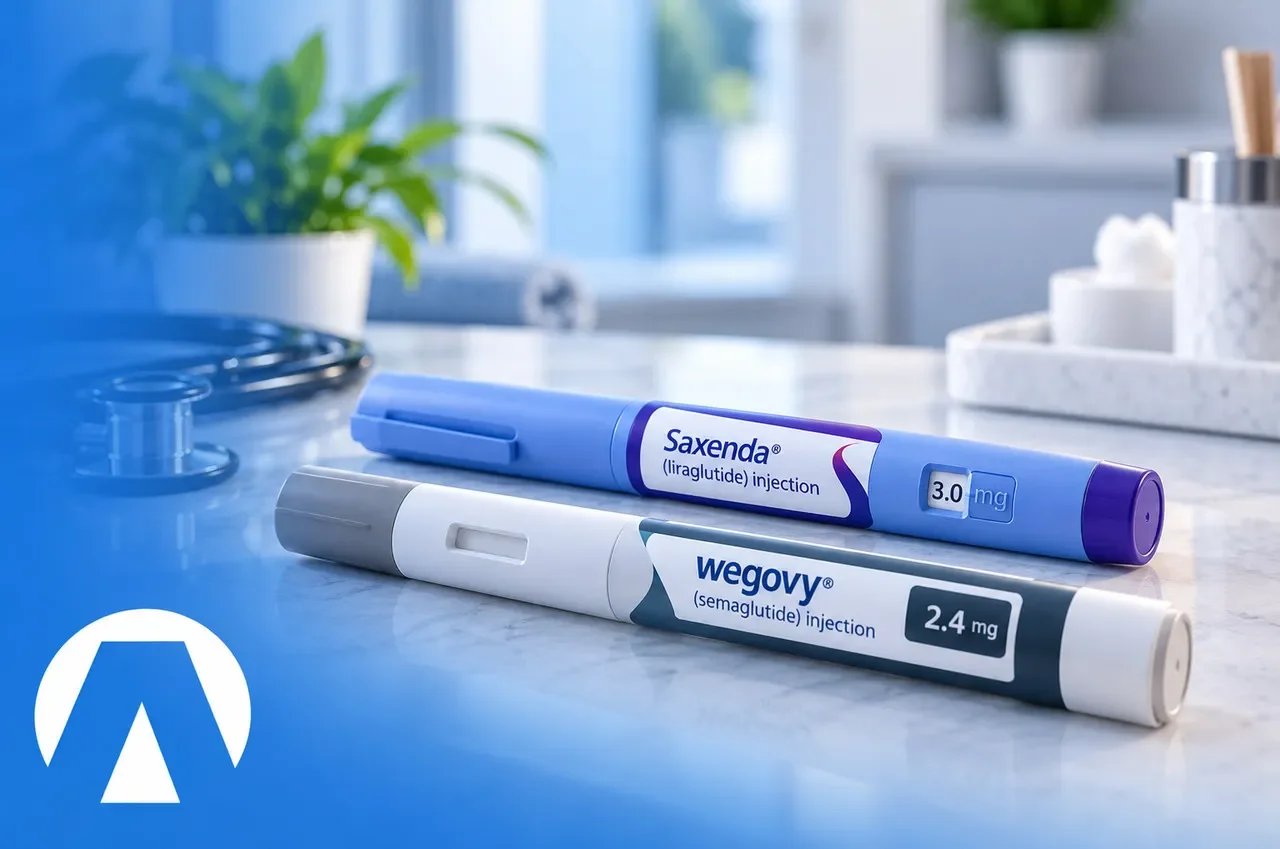
In the STEP 8 randomized clinical trial, adults with overweight or obesity without diabetes received either once-weekly semaglutide 2.4 mg or once-daily liraglutide 3.0 mg, along with counseling for diet and physical activity. After 68 weeks, mean body-weight change was -15.8% with semaglutide compared with -6.4% with liraglutide.
That does not mean every patient will lose 15.8% with semaglutide or 6.4% with liraglutide. Those are averages from a controlled clinical trial using specific doses and treatment protocols. Individual outcomes vary according to medication tolerance, adherence, nutrition, physical activity, starting weight, medical history, treatment duration, and other factors.
There are also safety considerations with both medications. Gastrointestinal symptoms are common, and current prescribing information includes warnings and precautions involving pancreatitis, gallbladder disease, severe gastrointestinal reactions, dehydration-related kidney injury, and other potential adverse effects.
Understanding semaglutide vs. liraglutide therefore requires looking beyond a single weight-loss percentage.
This guide explains how the medications work, their dosing schedules and half-lives, what the head-to-head research actually found, common side effects, important safety considerations, and what patients should understand before starting medical weight management.
Quick answer: Liraglutide and semaglutide are both GLP-1 receptor agonists, but liraglutide is shorter acting and used once daily for weight management, while injectable semaglutide is longer acting and generally used once weekly. In the STEP 8 head-to-head trial involving adults with overweight or obesity without diabetes, semaglutide 2.4 mg produced greater average weight loss at 68 weeks than liraglutide 3.0 mg. Medication selection still requires individualized medical evaluation because effectiveness, tolerability, contraindications, and treatment needs differ among patients.
What Are Liraglutide and Semaglutide?
Liraglutide and semaglutide belong to a medication class called glucagon-like peptide-1 receptor agonists, commonly abbreviated GLP-1 receptor agonists or GLP-1 RAs.
GLP-1 is a naturally occurring hormone involved in several physiological processes related to appetite, digestion, and glucose regulation.
Both liraglutide and semaglutide were designed to activate GLP-1 receptors while lasting substantially longer than naturally occurring GLP-1.
That extended activity makes them useful as medications.
Although both drugs belong to the same class, their molecular modifications and pharmacokinetics differ enough to produce an important practical distinction:
Liraglutide is suitable for once-daily administration.
Injectable semaglutide is suitable for once-weekly administration.
Current Saxenda prescribing information reports an elimination half-life of approximately 13 hours for liraglutide. Current Wegovy prescribing information reports an elimination half-life of approximately one week for semaglutide.
This difference helps explain why their injection schedules are so different.
Liraglutide vs. Semaglutide: What's the Difference?
The simplest distinction is that both medications activate the GLP-1 receptor, but they are different molecules with different pharmacokinetic properties.
For medical weight management, important differences include:
liraglutide is shorter acting
injectable liraglutide is administered daily
injectable semaglutide is much longer acting
injectable semaglutide is administered weekly
their dose-escalation schedules differ
their molecular modifications differ
clinical weight-loss outcomes differ
individual tolerability may differ
The direct STEP 8 trial also provides evidence that the differences are clinically meaningful.
In that study, once-weekly semaglutide 2.4 mg produced substantially greater average weight loss than once-daily liraglutide 3.0 mg over 68 weeks in adults with overweight or obesity without diabetes.
However, weight loss is only one component of treatment selection.
A clinician may also consider:
medical history
contraindications
previous weight-management treatment
gastrointestinal tolerability
medication adherence
other medications
pregnancy plans
patient preferences
treatment response
Medical weight management should therefore be individualized rather than based solely on which medication produced the larger average percentage in one clinical trial.
Liraglutide vs. Semaglutide Mechanism of Action
The liraglutide vs. semaglutide mechanism of action is more similar than different.
Both medications are GLP-1 receptor agonists.
They activate the GLP-1 receptor and influence biological pathways involved in appetite and calorie intake.
For weight management, one of their most important effects involves appetite regulation.
GLP-1 signaling can influence areas of the brain involved in:
hunger
appetite
food intake
satiety
As a result, treatment may make it easier for some patients to consume fewer calories.
This does not mean GLP-1 medications simply "burn fat."
Their weight-management effects are substantially related to reductions in energy intake.
Both medications also affect gastrointestinal physiology, including gastric emptying.
That helps explain some of their gastrointestinal effects and why medication interactions or procedures requiring anesthesia may deserve additional consideration.
How Does Liraglutide Work?
Liraglutide is an analogue of human GLP-1.
It activates the GLP-1 receptor, a cell-surface receptor involved in multiple physiological pathways.
Native GLP-1 has an extremely short biological half-life because enzymes rapidly break it down.
Liraglutide was modified to resist rapid degradation and remain active much longer.
According to current Saxenda prescribing information, liraglutide has a plasma half-life of approximately 13 hours following subcutaneous administration. That pharmacokinetic profile makes once-daily administration possible.
For weight management, liraglutide can reduce calorie intake by influencing appetite and satiety.
Importantly, patients still eat and digest food while taking liraglutide. The medication does not eliminate the need for nutrition, physical activity, adequate protein, sleep, and sustainable behavioral changes.
How Does Semaglutide Work?
Semaglutide is also a GLP-1 receptor agonist, but its molecular structure has been modified to substantially prolong its duration of action.
Current Wegovy prescribing information explains that semaglutide has modifications that protect it against DPP-4 degradation and promote albumin binding.
These changes contribute to its very long half-life.
For injectable semaglutide, the elimination half-life is approximately one week. Current prescribing information notes that semaglutide can remain in circulation for roughly 5 to 7 weeks after the final injectable dose, depending on the dose.
This extended exposure makes weekly injection possible.
Why Does Semaglutide Last Longer Than Liraglutide?
This is one of the most important pharmacologic differences between the medications.
Both drugs were engineered to extend the activity of GLP-1-like signaling, but semaglutide has structural modifications that produce substantially longer persistence.
Liraglutide's half-life is approximately:
13 hours
Semaglutide's half-life is approximately:
A half-life describes approximately how long it takes the amount of medication in the body to decrease by half.
It does not mean liraglutide stops working precisely 13 hours after an injection or that semaglutide disappears exactly one week after administration.
Instead, half-life helps describe how medication concentrations decline over time.
Semaglutide's substantially longer half-life supports once-weekly administration, while liraglutide's pharmacokinetics support daily administration.
Liraglutide vs. Semaglutide for Weight Loss
This is where the comparison becomes especially interesting.
Many medications are compared by taking the results from one clinical trial and placing them next to results from an entirely different trial.
That approach has limitations.
Different studies may include different:
patient populations
baseline weights
treatment durations
dietary interventions
physical activity programs
statistical methods
dropout rates
Fortunately, liraglutide vs. semaglutide for weight loss has been studied directly.
The STEP 8 trial randomized 338 adults with overweight or obesity to semaglutide, liraglutide, or corresponding placebo treatment. Importantly for Affinity Whole Health's medical weight-management population, participants in this trial did not have diabetes.
That makes STEP 8 particularly useful when discussing medical weight management in adults without diabetes.
Semaglutide vs. Liraglutide Weight Loss: What Did STEP 8 Find?
STEP 8 was a 68-week phase 3b randomized clinical trial conducted at 19 sites in the United States.
Participants were adults who had:
a BMI of at least 30, or
a BMI of at least 27 plus at least one weight-related condition.
Diabetes was an exclusion criterion.
Participants received:
Semaglutide: 2.4 mg subcutaneously once weekly after dose escalation.
Liraglutide: 3.0 mg subcutaneously once daily after dose escalation.
Both treatment groups also received counseling related to diet and physical activity.
At 68 weeks, estimated mean body-weight change was:
Semaglutide: -15.8%
Liraglutide: -6.4%
The estimated difference was -9.4 percentage points, favoring semaglutide in this specific trial.
This was statistically significant.
That is considerably stronger evidence than simply comparing results from unrelated semaglutide and liraglutide studies because both medications were evaluated within the same randomized trial.
How Many Participants Lost at Least 10% of Their Weight?
STEP 8 also examined clinically meaningful weight-loss thresholds.
At week 68:
70.9% of evaluated semaglutide participants achieved at least 10% weight loss.
For liraglutide:
25.6% achieved at least 10% weight loss.
That is a substantial difference.
But it is also important to interpret these percentages correctly.
They do not mean every future semaglutide patient has a 70.9% probability of losing 10% of body weight.
These percentages describe outcomes among participants evaluated within a particular clinical trial with specific eligibility criteria, doses, escalation schedules, counseling, and follow-up.
Real-world results can differ.
How Many Participants Lost at Least 15%?
At week 68, STEP 8 reported:
55.6% of evaluated semaglutide participants achieved at least 15% weight loss.
Compared with:
12.0% of liraglutide participants.
Again, these are trial outcomes rather than guarantees.
A person's response to GLP-1 therapy can fall well above or below the average.
What About 20% Weight Loss?
STEP 8 also examined the percentage of participants reaching at least 20% weight loss.
At week 68:
38.5% of evaluated semaglutide participants achieved at least 20% weight loss.
Compared with:
6.0% of liraglutide participants.
This provides further evidence that semaglutide 2.4 mg produced greater weight reduction than liraglutide 3.0 mg under the conditions studied.
Does That Mean Semaglutide Always Causes More Weight Loss?
No.
The STEP 8 trial provides high-quality evidence of the average comparative effect under a defined clinical protocol.
It does not tell us exactly what will happen to every individual.
For example, one patient may respond particularly well to liraglutide.
Another may be unable to tolerate semaglutide.
Another may discontinue treatment.
Another may have different dietary habits, physical activity, sleep, medications, or medical conditions affecting weight.
Clinical trial averages describe populations.
Medical treatment happens at the individual level.
A more accurate statement is:
In STEP 8, semaglutide 2.4 mg once weekly produced significantly greater average weight loss at 68 weeks than liraglutide 3.0 mg once daily among adults with overweight or obesity without diabetes.
That statement is both strong and appropriately limited to the evidence.
Why Might Semaglutide Produce Greater Weight Loss?
Both drugs activate the same general receptor system, so the difference cannot simply be explained by saying one is a GLP-1 medication and the other is not.
They are both GLP-1 receptor agonists.
Possible pharmacological contributors include differences in:
molecular structure
pharmacokinetics
duration of exposure
receptor activity
dosing
effects on appetite and energy intake
However, it is important not to turn plausible mechanisms into proven explanations for the entire clinical difference.
The strongest evidence is the clinical outcome itself:
At the doses studied, semaglutide produced greater average weight reduction than liraglutide.
Daily vs. Weekly GLP-1 Injections
For many patients, dosing frequency is one of the most noticeable practical differences.
Liraglutide
Liraglutide for weight management is administered once daily.
Injectable semaglutide
Injectable semaglutide for weight management is administered once weekly.
This means liraglutide requires substantially more injections over the course of a year.
Some patients may find weekly dosing more convenient.
However, convenience should not be the only consideration when choosing treatment.
Tolerance, medical history, contraindications, availability, adherence, and response all matter.
Liraglutide Dosing for Weight Management
Current Saxenda prescribing information recommends starting liraglutide at:
0.6 mg once daily for the first week.
The dose is then increased at weekly intervals:
Week 1: 0.6 mg daily
Week 2: 1.2 mg daily
Week 3: 1.8 mg daily
Week 4: 2.4 mg daily
Week 5 and onward: 3.0 mg daily
The recommended maintenance dose is 3 mg once daily.
The gradual escalation is intended to reduce the likelihood of gastrointestinal adverse reactions.
Patients should follow their prescribed schedule rather than accelerating dose escalation in an attempt to lose weight faster.
Semaglutide Dosing for Weight Management
Injectable semaglutide is also started at a low dose and gradually increased.
Current Wegovy prescribing information begins injectable treatment at:
0.25 mg once weekly
and uses gradual dose escalation to reduce gastrointestinal adverse reactions.
This titration process is important.
GLP-1 medications can produce substantial gastrointestinal symptoms, particularly when therapy begins or doses increase.
Increasing the dose more rapidly than prescribed does not guarantee faster fat loss and can increase tolerability problems.
Why Do GLP-1 Medications Require Dose Escalation?
The gastrointestinal system needs time to adapt to treatment.
Common adverse effects of GLP-1 receptor agonists include:
nausea
vomiting
diarrhea
constipation
abdominal discomfort
Gradual titration can improve tolerability.
This is why the starting dose should not be confused with the maintenance dose.
Someone taking an early titration dose is still in the process of adapting to treatment.
Likewise, patients should not independently increase doses because their appetite returns or the scale temporarily stops moving.
Weight loss is rarely perfectly linear.
Liraglutide vs. Semaglutide Side Effects
Because liraglutide and semaglutide belong to the same medication class, their adverse-effect profiles overlap considerably.
Gastrointestinal effects are especially common.
In STEP 8, gastrointestinal adverse events were reported in:
84.1% of semaglutide participants
and
82.7% of liraglutide participants.
This does not mean more than 80% of patients experienced severe gastrointestinal complications.
The category included gastrointestinal adverse events of varying severity.
The distinction between "any gastrointestinal adverse event" and "serious gastrointestinal complication" is important.
Common GLP-1 Side Effects
Depending on the medication and patient, common symptoms may include:
nausea
vomiting
diarrhea
constipation
abdominal discomfort
indigestion
decreased appetite
These symptoms may be more noticeable during:
treatment initiation
dose escalation
larger meals
meals high in fat
periods of dehydration
Tolerance varies considerably.
Some patients experience minimal symptoms.
Others require slower titration, dietary adjustments, or reconsideration of treatment.
Is Nausea Normal With Liraglutide or Semaglutide?
Nausea is a common adverse effect of GLP-1 receptor agonist therapy.
However, "common" does not mean every episode should simply be ignored.
Mild, temporary nausea can occur as the body adapts.
Persistent or severe nausea can lead to:
inadequate fluid intake
dehydration
reduced nutrient intake
difficulty consuming adequate protein
inability to tolerate treatment
Severe or persistent gastrointestinal symptoms should be discussed with the prescribing clinician.
Vomiting and Dehydration
Vomiting can become clinically important when it interferes with hydration.
Current prescribing information for both medications includes concerns related to kidney injury associated with volume depletion from gastrointestinal adverse reactions.
This is why patients should not view repeated vomiting as evidence that the medication is "working really well."
Weight lost primarily because a patient cannot keep food or fluids down is not the goal of medical weight management.
Treatment should be tolerable enough to support adequate nutrition and hydration.
Constipation on GLP-1 Therapy
Constipation can also occur.
Reduced food intake, changes in gastrointestinal motility, inadequate fluids, and changes in fiber intake can all contribute.
Strategies may vary depending on the patient, but nutrition and hydration deserve attention.
Persistent or severe constipation, significant abdominal pain, vomiting, or abdominal distention warrants medical evaluation rather than simply adding supplements indefinitely.
Can Liraglutide or Semaglutide Cause Pancreatitis?
Acute pancreatitis has been observed with GLP-1 receptor agonists, including these medications, and current prescribing information includes warnings regarding pancreatitis.
Current Wegovy labeling advises monitoring for symptoms that can include persistent or severe abdominal pain, sometimes radiating to the back, with or without nausea or vomiting. Treatment should be discontinued if pancreatitis is suspected.
Saxenda labeling contains a corresponding pancreatitis warning.
Severe persistent abdominal pain should not simply be attributed to routine GLP-1 nausea.
Liraglutide, Semaglutide, and Gallbladder Problems
Both treatments also carry warnings concerning acute gallbladder disease.
Possible gallbladder problems include gallstones and gallbladder inflammation.
There is an additional complication when interpreting this risk:
substantial or rapid weight loss itself can increase the risk of gallbladder disease.
Current prescribing information acknowledges that gallbladder disease can occur both in association with substantial or rapid weight loss and in its absence.
Potential symptoms requiring evaluation can include:
persistent upper abdominal pain
right-sided abdominal pain
fever
jaundice
nausea or vomiting
Patients experiencing concerning symptoms should contact their healthcare provider.
Thyroid C-Cell Tumor Warning
Both medications have important thyroid-related labeling.
Current Saxenda prescribing information carries a boxed warning concerning the risk of thyroid C-cell tumors based on animal studies. It states that liraglutide caused thyroid C-cell tumors in rats and mice and that it is unknown whether liraglutide causes these tumors, including medullary thyroid carcinoma, in humans.
Current semaglutide prescribing information contains corresponding thyroid C-cell tumor warnings.
These medications are contraindicated in patients with:
a personal history of medullary thyroid carcinoma, or
a family history of medullary thyroid carcinoma, or
Multiple Endocrine Neoplasia syndrome type 2.
Patients should provide an accurate personal and family medical history before treatment.
Does the Thyroid Warning Mean GLP-1 Medications Cause Thyroid Cancer in Humans?
The wording matters.
The boxed warning is based substantially on rodent findings.
For liraglutide, current labeling explicitly states that the relevance of the rodent C-cell tumor findings to humans has not been determined.
Therefore, it would be inaccurate to turn the boxed warning into the categorical statement:
"Liraglutide causes thyroid cancer in humans."
It would also be inappropriate to ignore the warning.
The contraindications concerning MTC and MEN 2 remain clinically important.
Liraglutide vs. Semaglutide and Heart Rate
GLP-1 receptor agonists can affect heart rate.
Current Saxenda labeling specifically advises patients to report sustained sensations of a pounding or racing heartbeat while at rest and recommends discontinuation in patients who experience a sustained increase in resting heart rate.
Patients experiencing persistent palpitations or unusual cardiovascular symptoms should discuss them with their clinician.
GLP-1 Medications and Pregnancy
Weight-loss treatment requires special consideration around pregnancy.
Current Wegovy prescribing information states that weight loss offers no benefit during pregnancy and may cause fetal harm. For weight reduction, semaglutide should be discontinued when pregnancy is recognized.
Pregnancy plans should therefore be discussed before beginning therapy.
This is particularly relevant with semaglutide because of its long half-life and prolonged persistence in circulation after the final dose.
Patients should follow the current prescribing information and their clinician's recommendations regarding treatment discontinuation before a planned pregnancy.
Can You Take Liraglutide and Semaglutide Together?
These medications should not simply be combined in an attempt to accelerate weight loss.
Both target the GLP-1 receptor pathway.
Using multiple GLP-1 receptor agonists together is not an evidence-based strategy for routine medical weight management.
Patients switching medications should follow a clinician-directed transition plan rather than overlapping treatment independently.
Can You Switch From Liraglutide to Semaglutide?
A clinician may sometimes consider switching GLP-1 medications because of factors such as:
treatment response
tolerability
adherence
dosing preferences
availability
clinical circumstances
However, the doses are not directly equivalent.
For example:
3 mg liraglutide daily does not translate into a mathematically equivalent semaglutide dose.
The medications have different:
molecular structures
half-lives
concentration-time profiles
titration schedules
Switching therefore requires a medication-specific plan.
Does Weekly Semaglutide Make Treatment Easier?
For some patients, yes.
A weekly injection may be easier to remember or incorporate into daily life than a medication requiring an injection every day.
However, dosing frequency is only one component of adherence.
A medication can only work as intended if the patient can:
tolerate it
access it
use it consistently
follow appropriate nutrition
attend follow-up
remain engaged with treatment
A weekly medication that someone repeatedly stops because of adverse effects is not necessarily more useful than a daily medication they tolerate and use consistently.
Appetite and Hunger on Liraglutide vs. Semaglutide
Both medications can reduce appetite and energy intake through GLP-1 receptor signaling.
Patients may notice:
reduced hunger
earlier fullness
smaller portion sizes
less interest in certain foods
less frequent eating
However, the goal should not necessarily be to eliminate hunger completely.
Hunger is a normal physiological signal.
Excessive appetite suppression can create another problem if the patient consistently fails to consume enough:
protein
essential nutrients
fluids
overall energy
This becomes particularly relevant when weight loss is rapid.
GLP-1 Weight Loss Is Not Automatically Fat Loss
When body weight decreases, the weight lost can include more than body fat.
Depending on the patient and circumstances, weight loss can involve:
fat mass
lean tissue
water
glycogen
This is why medical weight management should focus on body composition and health, not simply making the scale decrease as rapidly as possible.
Strategies that may help support lean tissue during weight loss include:
adequate dietary protein
resistance training when appropriate
avoiding unnecessarily severe calorie restriction
monitoring functional strength and overall health
Affinity has discussed this in greater detail in our guide to protein during GLP-1 weight loss.
Protein During Liraglutide or Semaglutide Treatment
Reduced appetite can make adequate protein intake more difficult.
Someone who previously ate three large meals may suddenly feel full after much smaller portions.
If food choices are not adjusted, total protein intake can fall substantially.
Protein requirements vary according to:
body size
age
activity
calorie intake
kidney function
health status
training goals
There is no single protein target appropriate for every GLP-1 patient.
The practical principle is to make nutrition quality intentional when appetite is significantly reduced.
Resistance Training During GLP-1 Weight Loss
Resistance training can complement medical weight management by providing a stimulus for maintaining muscle and strength.
Examples may include:
weight training
machines
resistance bands
body-weight exercises
The appropriate program depends on:
training experience
mobility
cardiovascular health
orthopedic conditions
age
recovery capacity
Patients do not need to become bodybuilders.
The goal is to give skeletal muscle a reason to remain functionally important while body weight decreases.
Is Faster Weight Loss Always Better?
No.
Rapid weight loss can be exciting on the scale, but rate alone does not define treatment quality.
Very aggressive calorie restriction can make it harder to maintain:
adequate protein
micronutrient intake
hydration
strength
exercise performance
Rapid weight loss may also contribute to gallbladder risk, and substantial physiological stress can contribute to temporary hair shedding in susceptible individuals.
A medically supervised program should therefore evaluate more than pounds lost per week.
Hair Loss During GLP-1 Weight Management
Some patients report hair shedding during substantial weight loss.
This may occur through telogen effluvium, a temporary form of diffuse hair shedding that can follow physiological stressors such as:
rapid weight loss
major calorie restriction
illness
surgery
nutritional deficiencies
significant stress
This does not establish that liraglutide or semaglutide directly damages hair follicles.
Multiple factors can contribute.
Affinity's guide to GLP-1 hair loss explains this distinction in more detail.
What Happens When You Stop Semaglutide?
Stopping treatment can lead to weight regain in some patients.
One of the clearest demonstrations comes from the STEP 1 extension.
After 68 weeks of semaglutide treatment, participants stopped both the medication and study lifestyle intervention. During the following year, participants who had received semaglutide regained approximately two-thirds of their prior weight loss, on average.
This does not mean every patient regains exactly two-thirds of their weight.
It does demonstrate an important principle:
Obesity is often a chronic condition, and the biological pressures affecting appetite and body weight can return after medication is discontinued.
Does Weight Regain Mean Semaglutide Failed?
Not necessarily.
Imagine someone taking medication for high blood pressure.
Their blood pressure improves while taking treatment and rises again after the medication is discontinued.
That does not necessarily mean the medication never worked.
Similarly, the return of appetite or weight after stopping GLP-1 therapy can reflect loss of the medication's ongoing pharmacological effect.
This is why long-term treatment planning matters.
Patients should discuss maintenance strategies with their clinician rather than assuming GLP-1 therapy is always a short course that permanently resets body weight.
What Happens When You Stop Liraglutide?
The same broad principle applies.
Liraglutide's appetite and weight-management effects depend on ongoing pharmacologic activity.
After treatment stops, the medication is eliminated and its appetite-regulating effects no longer continue.
Some patients may maintain portions of their weight loss through behavioral and lifestyle changes.
Others may experience increased appetite and weight regain.
Long-term weight management should therefore include a maintenance strategy rather than focusing only on the initial weight-loss phase.
Liraglutide vs. Semaglutide in Real-World Care
Clinical trials tell us what medications can accomplish under structured research conditions.
Real-world treatment is more complicated.
Patients may:
miss doses
stop because of side effects
lose insurance coverage
change medications
not reach the maintenance dose
have difficulty maintaining nutrition
discontinue follow-up
A 2024 real-world study published in JAMA Network Open examined one-year weight reduction with semaglutide or liraglutide and emphasized that treatment persistence can significantly influence real-world outcomes.
This matters because clinical effectiveness is not just about pharmacology.
A treatment must also be sustainable.
Why Trial Weight Loss and Real-World Weight Loss Can Differ
Suppose a clinical trial reports an average weight reduction of 15%.
That does not mean everyone prescribed the medication in routine practice will lose 15%.
Clinical trials often involve:
structured follow-up
carefully selected participants
standardized dose escalation
lifestyle counseling
monitoring
adherence support
Real-world patients face additional barriers.
Therefore, clinical trial results should be used to understand expected treatment effects, not as promises.
Liraglutide vs. Semaglutide for Someone Without Diabetes
This is particularly relevant to Affinity Whole Health.
The STEP 8 comparison specifically enrolled adults with overweight or obesity without diabetes.
Therefore, the direct weight-loss findings do not need to be extrapolated from a diabetes population.
This is important because diabetes status can influence weight-loss responses in GLP-1 trials.
For Affinity's medical weight-management population, STEP 8 provides unusually relevant comparative evidence.
Who May Be Considered for Medical Weight Management?
Medication-based weight management is not simply about wanting to lose a few pounds quickly.
Appropriate treatment involves evaluation of factors such as:
BMI
weight-related health conditions
previous weight-management attempts
medical history
medications
contraindications
treatment goals
nutrition
physical activity
potential adverse effects
A medical program should also consider whether the patient can safely sustain the nutritional changes associated with appetite suppression.
Who Should Not Use Liraglutide or Semaglutide?
Contraindications and precautions need to be reviewed individually.
For example, both Saxenda and Wegovy carry contraindications related to a personal or family history of medullary thyroid carcinoma and MEN 2.
Other clinical considerations can include:
pregnancy
pancreatitis history
gallbladder disease
severe gastrointestinal problems
kidney concerns related to dehydration
medication interactions
hypersensitivity
This is why medical history matters before treatment begins.
Liraglutide vs. Semaglutide: Frequently Asked Questions
What is the difference between liraglutide and semaglutide?
Both are GLP-1 receptor agonists, but they are different molecules with substantially different pharmacokinetics. Liraglutide has a half-life of approximately 13 hours and is administered daily for weight management. Injectable semaglutide has a half-life of approximately one week and is generally administered weekly.
Is semaglutide the same as liraglutide?
No. They belong to the same GLP-1 receptor agonist class and share important mechanisms, but they are different medications with different molecular structures, half-lives, dosing schedules, and clinical weight-loss results.
What is the liraglutide vs. semaglutide mechanism of action?
Both activate GLP-1 receptors and influence pathways involved in appetite, calorie intake, digestion, and glucose regulation. Their overall mechanism is similar, but molecular modifications cause semaglutide to remain active substantially longer than liraglutide.
Which is taken daily, liraglutide or semaglutide?
Liraglutide for weight management is administered once daily. Injectable semaglutide for weight management is generally administered once weekly.
How long does liraglutide last?
Liraglutide has an elimination half-life of approximately 13 hours after subcutaneous administration, supporting once-daily dosing.
How long does semaglutide last?
Injectable semaglutide has an elimination half-life of approximately one week. Current prescribing information indicates that it can remain in circulation for approximately 5 to 7 weeks after the last injectable dose, depending on dose.
What did the liraglutide vs. semaglutide weight-loss trial find?
In STEP 8, adults with overweight or obesity without diabetes experienced an estimated mean weight change of -15.8% with semaglutide 2.4 mg weekly compared with -6.4% with liraglutide 3.0 mg daily at 68 weeks. Both groups received diet and physical-activity counseling.
How much more weight did participants lose with semaglutide?
The estimated difference between the two active-treatment groups in STEP 8 was 9.4 percentage points of body weight at week 68.
How many people lost at least 10% with semaglutide vs. liraglutide?
Among participants evaluated at week 68 in STEP 8, 70.9% in the semaglutide group and 25.6% in the liraglutide group achieved at least 10% weight loss.
How many lost at least 15%?
At week 68, 55.6% of evaluated semaglutide participants and 12.0% of liraglutide participants achieved at least 15% weight loss.
How many lost at least 20%?
At least 20% weight loss occurred in 38.5% of evaluated semaglutide participants compared with 6.0% of liraglutide participants in STEP 8.
Did STEP 8 include people with diabetes?
No. STEP 8 enrolled adults with overweight or obesity without diabetes.
This makes the study particularly relevant when discussing GLP-1 medical weight management in non-diabetic adults.
Are semaglutide and liraglutide both GLP-1 medications?
Yes. Both are GLP-1 receptor agonists.
Do liraglutide and semaglutide reduce appetite?
Both medications influence GLP-1 receptor pathways involved in appetite and energy intake. Many patients experience reduced hunger or earlier satiety.
Does semaglutide burn fat?
It is more accurate to say that semaglutide can reduce energy intake through effects on appetite and satiety, leading to weight loss. The resulting weight reduction can include substantial fat mass, but GLP-1 medications are not simply direct "fat burners."
Can I take liraglutide and semaglutide together?
These medications should not be independently combined. They act on the same GLP-1 pathway, and switching or changing therapy should be managed by a qualified healthcare professional.
Can I switch from liraglutide to semaglutide?
Switching may be considered in some clinical circumstances, but the doses are not directly interchangeable. A clinician should determine the transition and titration plan.
Is nausea more common with semaglutide or liraglutide?
Both commonly cause gastrointestinal adverse effects. In STEP 8, gastrointestinal adverse events overall occurred in 84.1% of semaglutide participants and 82.7% of liraglutide participants. Those figures include gastrointestinal events of varying severity and should not be interpreted as rates of severe complications.
Can semaglutide or liraglutide cause pancreatitis?
Acute pancreatitis has been observed with GLP-1 receptor agonists, and both medications have relevant warnings. Persistent or severe abdominal pain, particularly pain that may radiate to the back, requires prompt medical attention.
Can they cause gallstones?
Both treatments carry warnings regarding acute gallbladder disease. Substantial or rapid weight loss itself can also increase gallbladder risk.
Can you use semaglutide while pregnant?
Current Wegovy prescribing information states that weight loss offers no benefit during pregnancy and may cause fetal harm. For weight reduction, treatment should be discontinued when pregnancy is recognized.
Will I regain weight after stopping semaglutide?
Weight regain can occur. In the STEP 1 extension, participants regained approximately two-thirds of their previous semaglutide-associated weight loss, on average, during the year after treatment and study lifestyle intervention were discontinued. Individual outcomes vary.
Do I still need to exercise while using a GLP-1 medication?
Physical activity remains an important part of medical weight management. Resistance training may be particularly useful for supporting muscle and functional strength during significant weight loss.
Is protein important while taking semaglutide or liraglutide?
Yes. Significant appetite suppression can make adequate protein intake more difficult. Protein needs should be individualized according to body size, age, health, physical activity, kidney function, and other factors.
The Bottom Line on Liraglutide vs. Semaglutide
Liraglutide and semaglutide are both GLP-1 receptor agonists, but they are different medications.
Their mechanisms overlap substantially, but their pharmacokinetics do not.
Liraglutide has a half-life of approximately 13 hours, supporting once-daily administration.
Injectable semaglutide has a half-life of approximately one week, supporting once-weekly administration.
For patients primarily interested in liraglutide vs. semaglutide for weight loss, the STEP 8 trial provides particularly useful evidence because it compared the medications directly.
Among adults with overweight or obesity without diabetes, mean body-weight change after 68 weeks was:
-15.8% with semaglutide 2.4 mg once weekly
compared with
-6.4% with liraglutide 3.0 mg once daily.
Semaglutide participants in that trial were also more likely to reach weight-loss thresholds of at least 10%, 15%, and 20%.
Those results establish an important comparative difference under the conditions studied.
They do not guarantee an individual outcome.
Both medications can produce gastrointestinal adverse effects, and both require consideration of important warnings, contraindications, and patient-specific factors. Pancreatitis, gallbladder disease, dehydration-related complications, severe gastrointestinal symptoms, pregnancy, and thyroid C-cell tumor warnings are among the issues that may need to be considered.
Medical weight management should also extend beyond medication selection.
Preserving health during significant weight loss means paying attention to:
protein intake
resistance exercise
hydration
micronutrient adequacy
muscle and strength
sleep
long-term behavioral habits
treatment adherence
Patients should also understand that obesity is often a chronic condition.
In the STEP 1 extension, substantial weight regain occurred after semaglutide was withdrawn, reinforcing the importance of planning for long-term weight maintenance rather than treating GLP-1 therapy as a temporary crash diet.
Ultimately, comparing semaglutide vs. liraglutide is not simply about asking which drug produces the larger number on the scale.
The more useful questions are:
How much weight loss is clinically appropriate for this patient?
Can the medication be tolerated and used consistently?
Are there contraindications or relevant medical risks?
Can adequate nutrition and lean tissue be supported during treatment?
And what is the long-term plan for maintaining the results?
Those questions turn GLP-1 therapy from a short-term weight-loss strategy into a more comprehensive approach to medical weight management.
While liraglutide and semaglutide are both GLP-1 receptor agonists with evidence in weight management, they differ in dosing, clinical trial outcomes, and current practical use. Affinity Whole Health does not offer liraglutide. For eligible non-diabetic patients seeking medical weight management, an Affinity provider can evaluate available treatment options based on medical history, weight-loss goals, and individual needs.
Primary Medical Sources
Rubino DM, Greenway FL, Khalid U, et al. STEP 8 Randomized Clinical Trial. JAMA. 2022;327(2):138-150. This is the most important source for the article because it directly compared once-weekly semaglutide 2.4 mg with once-daily liraglutide 3.0 mg in adults with overweight or obesity without diabetes. JAMA Network
Current Wegovy Prescribing Information. Provides current dosing, pharmacokinetic, contraindication, warning, pregnancy, and safety information for semaglutide. Novo Pi
Current Saxenda Prescribing Information. Provides current dosing, pharmacokinetic, contraindication, warning, and safety information for liraglutide. Novo Pi
Wilding JPH, et al., STEP 1 Trial Extension. Provides evidence regarding weight regain following withdrawal of semaglutide and lifestyle intervention. PubMed
Medical Disclaimer: This article is for educational purposes only and does not provide individualized medical advice. GLP-1 medications require appropriate medical evaluation, prescribing, dosing, and follow-up. Individual results and adverse effects vary. Do not start, stop, combine, switch, or change the dose of liraglutide, semaglutide, or another prescription medication based solely on information in this article.